
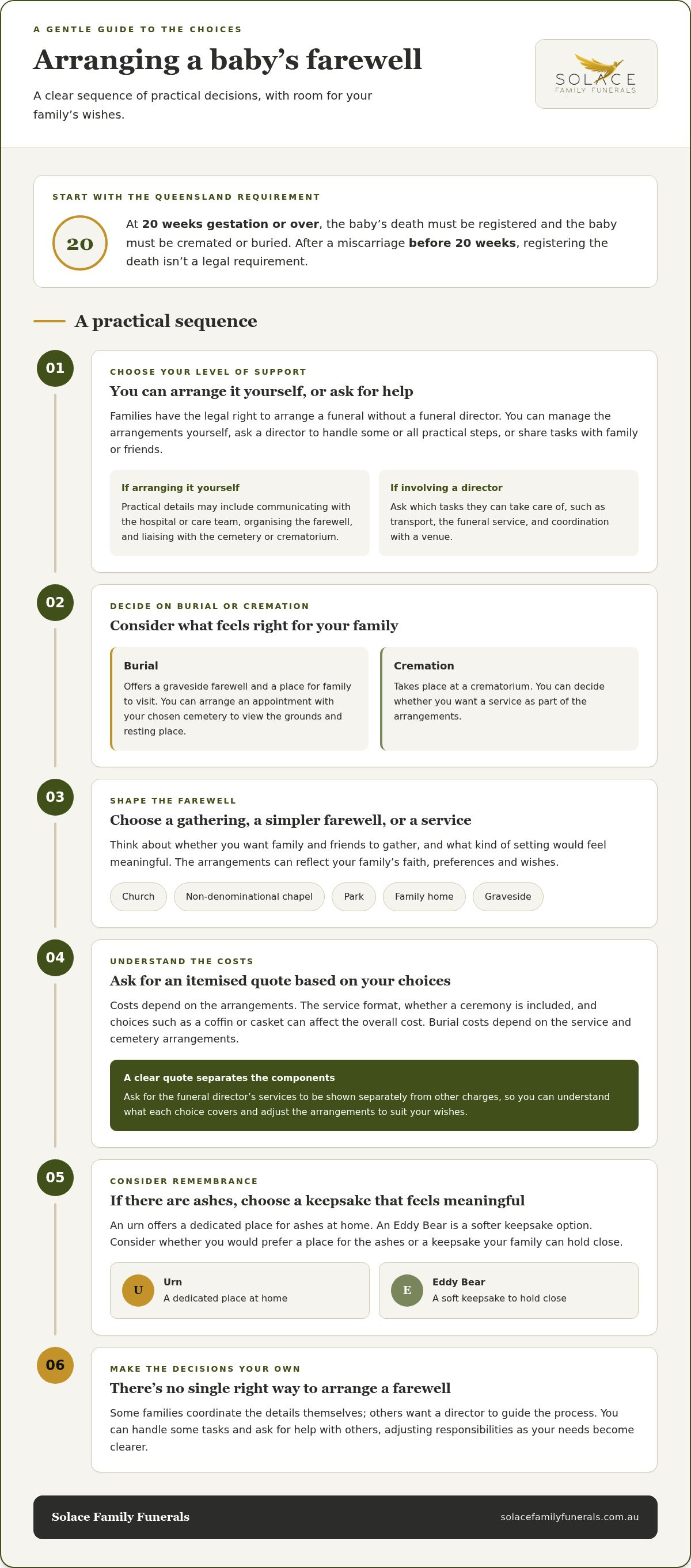
In Queensland, a baby born at 20 weeks gestation or over must have the death registered and be cremated or buried; after a miscarriage before 20 weeks gestation, registering the death isn’t a legal requirement. A baby funeral director on the Gold Coast can help you understand the practical choices for a funeral or cremation, while the decisions about how to remember your baby remain yours.
It can be hard to take in arrangements while you’re grieving, especially when you’re unsure what happens next. This guide explains your options, including ashes and keepsakes, possible venues, and how a baby funeral director on the Gold Coast can help organise a farewell.
You’ll also learn how direct cremation differs from a service with family viewing or a memorial, and what to consider when choosing between cremation and burial. The aim is to explain the choices clearly and gently, so you can focus on what feels right for your family.
Key Takeaways
- In Queensland, a baby born at 20 weeks gestation or over must have the death registered and be cremated or buried. After a miscarriage before 20 weeks gestation, registering the death isn’t a legal requirement.
- You can arrange a funeral without engaging a funeral director, but support with practical arrangements may help ease the load.
- Consider whether you’d like ashes returned in an urn or kept in a different kind of keepsake, such as an Eddy Bear.
- Think about the kind of farewell that feels right for your family, from a church or chapel to a park, home or graveside.
- Explore the differences between direct cremation, family viewing, a full-service cremation and a memorial to find an arrangement that suits your wishes.
Why Choose Us for a Funeral or Cremation on the Gold Coast?
In Queensland, the requirements depend on gestation, while the farewell can reflect your family’s wishes. Knowing the registration rule and the main arrangement choices can help make the next decisions clearer.
Funeral Arrangement Support
Arrangements may include cremation or burial, with a service or a simpler farewell. Consider whether you want family and friends to gather and what setting would feel meaningful. These choices shape the arrangements and quote, including the ceremony, coffin or casket, and venue.
In Queensland, a baby born at 20 weeks gestation or over must have the death registered and be cremated or buried. After a miscarriage before 20 weeks gestation, registering the death is not a legal requirement. The gestation point therefore affects which formal steps apply.
Burial and Cremation Choices
Burial offers a graveside farewell and a place for family to visit. If you’re considering burial, arrange an appointment with your chosen cemetery to view the grounds and resting place. Cremation is another option, and you can decide whether you want a service as part of the arrangements.
Gold Coast families can hold a children’s funeral at a church, non-denominational chapel, park, family home or graveside. A burial takes place at a cemetery, while cremation involves a crematorium. The setting can reflect your family’s faith, preferences and wishes for the farewell.
Funeral and Cremation Costs
Costs depend on the arrangements, so a quote should reflect the choices you make. For direct cremation, the price is provided after a quote request. The service format, whether a ceremony is included, and choices such as a coffin or casket affect the overall cost.
A full service includes different components from direct cremation, while burial costs depend on the service and cemetery arrangements. Ask for an itemised quote that separates the funeral director’s services from other charges. This makes it easier to understand what each choice covers and adjust the arrangements to suit your wishes.
Baby and Infant Funeral Directors
Which funeral directors on the Gold Coast arrange baby and infant funerals? Look for a baby funeral director on the Gold Coast who can explain the practical steps with care and organise a children’s funeral. Support may include arranging cremation or burial and shaping a farewell around your family’s needs.
Which Gold Coast cemeteries and crematoriums offer infant or stillborn burial and cremation? Burial is arranged through a chosen cemetery, while cremation involves a crematorium. An appointment at the cemetery lets you view the grounds and resting place. Possible farewell settings also include a church, chapel, park, home or graveside.
Do I have to use a funeral director?
No. Families in every Australian state and territory have the legal right to arrange a funeral without engaging a funeral director. You can organise the arrangements yourself or ask a director to manage some or all of the practical steps. Choose the level of support that feels manageable for your family.
Some Gold Coast funeral directors provide 24-hour first-call coverage every day of the week. That can give families a way to reach someone promptly when a death occurs, although availability and the support provided differ between directors. If you’re speaking with a baby funeral director on the Gold Coast, explain what has happened and ask which arrangements they can take care of, such as transport, the funeral service and coordination with a venue.
Arranging a funeral yourself means coordinating the practical details. You may need to communicate with the hospital or care team, organise the farewell, and liaise with the cemetery or crematorium. A funeral director can bring these moving parts together. You can also handle some tasks yourself and ask for help with others.
Choosing the support that feels right
Start by listing what needs attention and which tasks a trusted friend or relative could take on. For example, someone might contact family members while you focus on the arrangements. If you engage a director, note your priorities, such as a private farewell, a gathering with friends or help coordinating the service. This can make the conversation easier.
Emotional support is separate from funeral arrangements. In Australia, Sands Australia, Bears of Hope and Red Nose provide support for people affected by pregnancy and infant loss. This support may complement practical help from a funeral director, family member or friend, but it doesn’t replace the person coordinating the funeral.
If you’re unsure where to turn, ask a caring person to sit with you while you make calls. You might contact a hospital social worker or your GP for guidance, then speak with a bereavement support organisation whose services suit your situation. A friend can note names, questions and next steps, so you don’t have to remember every detail.
There’s no single right way to arrange a meaningful farewell. Some families prefer to coordinate the details themselves, while others want a director to guide the process. Choose the level of help that suits you, and adjust responsibilities as your needs become clearer.
Ashes in an urn or an Eddy Bear
After cremation, deciding how to keep your baby’s ashes can become a personal part of remembrance. An urn offers a dedicated place at home, while an Eddy Bear provides a softer keepsake option. Consider what feels meaningful and whether you prefer a place for the ashes or a keepsake your family can hold close.
Before deciding, think about when you might want to remember your baby. You may prefer an urn in a quiet place, such as a bedroom shelf, or an Eddy Bear kept nearby for comfort. These are personal choices, not measures of how much you loved your child. Let your wishes guide how you remember.
If you’re considering an urn, think about where it will stay and who will care for it. A stable, private place can make it easier to keep at home. If an Eddy Bear feels more comforting, consider who will keep it and whether you want it present at family gatherings. Thinking through these details can help clarify your choice.
Families can also discuss their preferences with a celebrant while planning the farewell. You might include a moment of silence, a reading or a personal message before deciding where the ashes will remain. A celebrant can help shape words that reflect your family’s beliefs and wishes, without making the farewell feel formal or impersonal.
If relatives or close friends have different views, take time to hear what each person hopes for. One person may find comfort in an urn at home, while another values a keepsake they can hold. Discuss what feels right for the immediate family and choose a plan that respects your baby’s place in everyone’s life.
Practical support can help when decisions feel difficult. Some Gold Coast funeral directors provide 24-hour first-call coverage every day of the week, which can give families a way to discuss arrangements when a death occurs. For keepsakes, focus on what feels affordable and manageable for your family, rather than comparing choices with anyone else’s.
There’s no single right choice between an urn and an Eddy Bear. Take your time and consider what brings comfort and feels true to your family. A small gesture, such as placing a special note beside an urn or keeping a bear in a familiar room, can make remembrance personal.
Caskets, coffins, urns and keepsakes
A coffin or casket is part of planning a baby’s funeral, while an urn or keepsake may be chosen after cremation. Each item can reflect your wishes without elaborate personalisation. First consider whether you’re planning burial, cremation or a memorial service, then decide which objects matter to your family.
For a burial, the coffin or casket is part of the farewell and final resting place. You might choose a simple design or add a personal detail, such as a name or message. Tell the funeral director what matters to you and discuss how that choice fits the service and burial arrangements.
For cremation, ask how the ashes will be returned and what options there are for keeping them. An urn offers a dedicated place at home, while a keepsake provides another way to remember your baby. Consider where you would keep it and whether you want close family members to share in the decision.
Some families include a personal object in the service rather than choosing a lasting keepsake straight away. A handwritten note, a small flower or a photograph can give the farewell a personal focus. For a memorial service, these details can help friends and relatives participate without adding complicated arrangements.
Personalised choices don’t need to be extensive. You could choose a meaningful colour, include a name or invite family members to contribute a short message. If decisions feel difficult, write down your preferred options and discuss them one at a time. A funeral director can explain how each choice fits the arrangements.
Keep the practical details together. Note the chosen coffin or casket, any personal items for the service, and how you’d like to receive or keep the ashes. Sharing the list with the person coordinating the funeral can reduce repeated conversations and keep your wishes clear.
No single object defines a loving farewell. A simple coffin, a chosen urn or one carefully selected keepsake can each hold personal meaning. Let your family’s wishes guide the choice, leaving room for everyone to remember your baby in their own way.
Church, chapel, park, home and graveside venues
A children’s funeral can be held at a church, non-denominational chapel, park, family home or graveside. Each setting offers a different way to honour your baby. Consider who you’d like present, the kind of farewell you want, and whether the venue will feel comfortable for those attending.
A church may suit families who want faith, familiar readings or religious traditions included. Discuss the service format and any elements you’d like, such as prayers, music or a moment for family members to speak. These details can help shape a farewell that reflects your beliefs.
A non-denominational chapel provides a setting for a service without a specific religious tradition. You could plan readings, music or quiet time for friends and relatives to remember your baby. Consider what matters most to your family and use those wishes to guide the arrangements.
A park offers an outdoor setting for a personal gathering, while a family home may feel more familiar and private. For either option, picture where guests will gather and where the service will take place. A simple plan for seating, music or a reading can help make the occasion feel considered.
At a graveside, family and friends gather at the cemetery for the farewell and burial. If you’re considering burial, arrange an appointment with your chosen cemetery to view the grounds and resting place. Seeing the location can help you decide whether it feels right for your baby.
Before choosing a venue, write down your priorities. You might want an outdoor setting, a religious service or a quiet gathering with close family. Consider how the venue will support those wishes and what practical arrangements you’ll need. Keeping the details together can make planning easier.
Paperwork and venue arrangements are separate parts of planning. Keep funeral documents together and note the cemetery or venue details alongside your preferred service elements. This gives you a clear record when coordinating with family or discussing arrangements with a funeral director.
No single setting makes a farewell more meaningful than another. A church, chapel, park, home or graveside can each provide a place to honour your baby in a personal way. Choose the setting that reflects your family’s wishes and the gathering you want.
Solace Family Funerals: Direct Cremation
Solace Family Funerals can arrange a direct cremation when you want a simpler option without a formal service. If you’d like time with your baby before cremation, Family Viewing offers a private gathering. A Full Service Cremation or Full Service Memorial provides another way to gather and remember together.
Start by deciding whether you want a viewing, a gathering or a more private farewell. These preferences can guide a conversation about the arrangement that feels right for your family. Solace Family Funerals offers these options with transparent, all-inclusive pricing, so you can understand the arrangement before deciding.
If you’d like to talk through the choices, contact Solace Family Funerals at a pace that feels comfortable for you.
Take the next step at your own pace
You don’t need to settle every detail at once. Begin by sharing what matters most to your family, whether that’s a private goodbye, time together before cremation or a gathering to remember your baby. Then consider the arrangements that feel right and take each decision one at a time.
If you’re seeking a baby funeral director on the Gold Coast, Solace Family Funerals offers Direct Cremation, Family Viewing and Full Service Cremation. You can discuss these options and how they might suit your wishes without having every answer ready before you begin.
Contact Solace Family Funerals to talk through the next step. You can move forward in your own time, with care for what feels meaningful to your family.
Frequently Asked Questions
Can Brothers and Sisters Be Involved?
Yes, brothers and sisters can be included in a way that suits their age and comfort. A child might draw a picture, help choose a song or place a flower as part of the farewell. Keep participation optional and explain what will happen in clear, gentle words. A trusted adult can stay with them, answer questions and give them space to step away.
Can I Spend Time With My Baby?
Yes. Family Viewing gives close family and friends a private opportunity to spend quiet time with your baby before cremation or burial. You might share a cuddle, say a few words or simply sit together. It can help to decide beforehand who you’d like present and whether you want a photograph, blanket or another personal item with you.
Can I personalise a funeral to reflect the life of my loved one?
Yes, you can shape the service around your baby and your family’s wishes. You might choose meaningful music, readings or photographs, and invite relatives to share a memory. Full Service Cremation includes celebrant coordination, floral arrangements and media presentations. Focus on the details that feel personal, rather than adding elements for their own sake.
Do I have to pay upfront?
Payment timing depends on the written terms for your chosen funeral arrangements. Before agreeing, read the quote and payment schedule carefully, including when payment is due and what the amount covers. Keep written estimates together to compare services and inclusions. This helps you understand your financial commitments before finalising decisions.
How Much Does A Baby or Child Service Cost?
The price depends on the arrangements and is provided after a quote request. Factors include cremation or burial, whether there’s a service, and choices such as Family Viewing, venue, coffin and floral arrangements. Ask for an itemised quote that explains the selected services and related charges. This helps you understand what the farewell includes and which choices affect the total.
How do I know what the deceased would have wanted?
If your baby’s wishes aren’t known, your family can make choices with love and care. Consider what feels true to your child and family, such as a favourite colour, a meaningful song or a quiet farewell. You might also discuss family traditions with close relatives, then choose only what feels right.
How do I know you’re reputable?
Look for clear information about the funeral home, its services and what each arrangement includes. Solace Family Funerals is a locally family-owned funeral home on the Gold Coast, with transparent, all-inclusive pricing. A written quote can help you understand the proposed arrangements before deciding, including which services are included and how the plan reflects your wishes.
How long does it take for collection to happen?
Collection timing depends on where your baby is being cared for, the steps needed before release and transport arrangements. The hospital or care team’s release process, collection location and coordination all affect timing. Keep contact details together and note any instructions you’ve received. This gives the funeral arrangements a clear starting point without adding another task to remember.


