
What if the cremation and the farewell didn’t have to happen at the same time? If you’re considering direct cremation then memorial service, you can arrange the cremation first and gather with family and friends later, when there’s more space to plan and be together. It’s understandable to wonder whether choosing direct cremation means giving up a personal farewell. It doesn’t.
A memorial is a separate arrangement, so you can decide whether to hold one and when you’re ready. It isn’t automatically included with direct cremation, but you can arrange a distinct gathering after cremation. You don’t need to settle every detail while you’re grieving.
This guide explains how the two choices fit together and how to shape a memorial around the person you’re remembering. You’ll find practical ideas for choosing a setting, timing and format, along with manageable planning steps. Solace Family Funerals is a local, family-owned funeral home on the Gold Coast. Our team understands that families may need time before coming together, and that a meaningful farewell doesn’t have to follow a fixed timetable.
Key Takeaways
- Understand what direct cremation involves and how it differs from a formal gathering.
- See how direct cremation then memorial service leaves room to plan a farewell when your family is ready.
- Explore choices for the gathering, including its location, timing and who you’d like to bring together.
- Use simple planning steps to begin without settling every detail at once.
- Learn how Solace Family Funerals’ separate full-service memorial can be held after cremation or without the casket present.
Direct cremation then memorial service: what does this choice mean?
You may want a simple cremation while giving family and friends more time before gathering to remember the person who has died. These are separate decisions. Direct cremation takes place without a formal funeral service at that time; a memorial can be arranged separately, at a time and place that suits your family.
Put simply, direct cremation is an unattended cremation without a formal service at the time; a later memorial is a separate gathering to remember the person. Cremation describes the method of final disposition, while the memorial gives people an opportunity to come together. You can read a general overview of Cremation for background on the process and its wider use.
Choosing direct cremation doesn’t automatically arrange or include a memorial service. If you decide you’d like one, it’s a distinct arrangement, and you can consider the details when you feel ready. Keeping the decisions separate can reduce the pressure to plan a gathering immediately, particularly when relatives need time, are travelling or are processing the loss in different ways.
How is a memorial after cremation different from a funeral service?
A memorial after cremation is a gathering to honour and remember the person, held after the cremation rather than as a service at that time. The timing and format differ, but neither choice is more meaningful than the other. Solace Family Funerals’ full-service memorial is held without the casket present, including when it follows cremation. The gathering can still give family and friends time to share memories and be together.
Does direct cremation mean there is no opportunity to say goodbye?
No. Direct cremation means there isn’t a formal service at the time of cremation, but it doesn’t rule out a separate farewell afterwards. Some families choose to gather; others prefer a quieter way to remember. There’s no single sequence everyone needs to follow, and you don’t have to decide on a service before you know what feels right. If you’re weighing up the cremation arrangements, the direct cremation options guide explains them in more detail.
With direct cremation then memorial service, the cremation and the gathering remain distinct choices. You can make the first arrangement without settling every detail of a later farewell. That gives your family time to consider whether a memorial would help and what kind of gathering would feel fitting.
What happens between direct cremation and a later memorial?
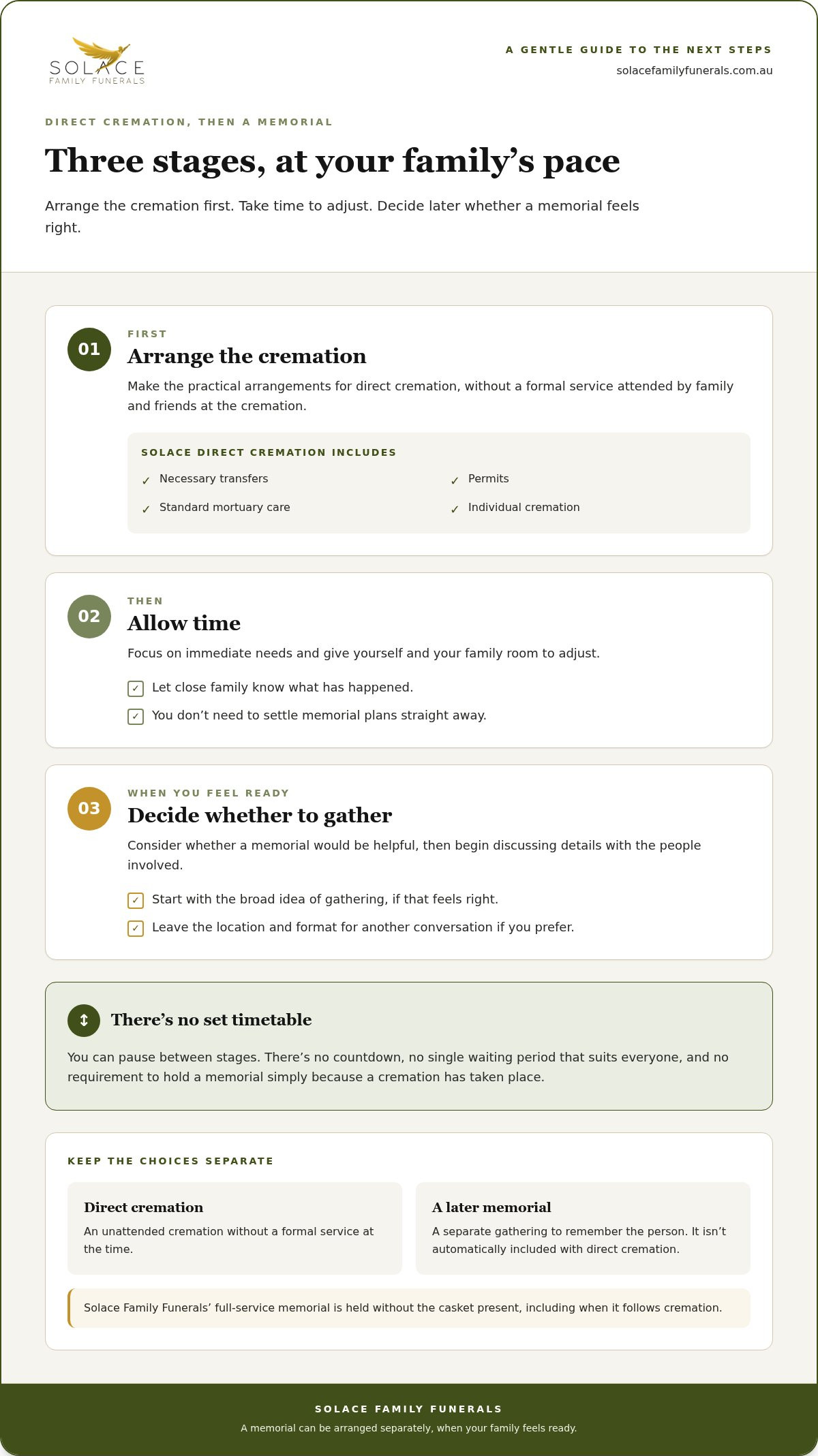
You don’t need to plan a memorial at the same time as arranging direct cremation. Take the decisions in stages: make the cremation arrangements, give yourself and your family room to adjust, then decide whether you’d like to gather. There’s no countdown or set timetable. This approach lets you make each choice when you have the space for it.
A simple sequence may look like this:
- Arrange the cremation. Make the practical arrangements for direct cremation, without a formal service attended by family and friends at the cremation.
- Allow time. Focus on immediate needs and let close family know what has happened, without settling memorial plans straight away.
- Decide whether to gather. When it feels right, consider whether a memorial would be helpful and begin discussing details with those involved.
You can pause between these steps. Some families have an early sense of what they want; others need more time to talk, reflect or make space for relatives to come together. During this period, sorting out legal affairs often becomes a priority as well, and seeking guidance from professional probate administration services can help ease the burden. There’s no requirement to hold a memorial simply because a cremation has taken place.
What does an unattended cremation involve?
“Unattended” means family and friends aren’t present at a formal service during the cremation. Solace Family Funerals’ direct cremation includes necessary transfers, permits, standard mortuary care and individual cremation, without a formal service. A later memorial is a separate arrangement. The direct cremation guide for Gold Coast families explains the option in more detail.
When can a family begin thinking about a memorial?
You can begin thinking about a memorial whenever your family feels ready. There’s no single waiting period that suits everyone, and the gathering can be planned for later. A gentle starting point is to consider when the people closest to the person might be able to come together, without treating that as a deadline.
You might start by discussing the broad idea rather than choosing every detail. First decide whether a gathering feels right, then leave the location and format for another conversation. If family members are in different places or need time, include that in your planning. A later memorial can be arranged with flexibility around timing and location.
For support thinking through the separate arrangements, Solace Family Funerals’ direct cremation and memorial services offer a starting point for understanding the options available to Gold Coast families.
Which memorial choices can make the gathering feel personal?
A memorial doesn’t need many special touches to feel meaningful. Choose one or two details that remind people of the person, or keep the gathering simple and let being together be enough. With direct cremation then memorial service, the later gathering can reflect your family’s wishes rather than follow a fixed format. There’s no checklist to complete, and you can leave decisions open until they feel easier to make.
Where and when could the memorial take place?
Solace Family Funerals’ full-service memorial offers flexibility around location and timing. As you consider what would suit, think about the comfort and access needs of the people you hope to bring together, as well as when they can attend. A familiar setting may feel right for your family. The aim is to make a manageable choice, not to find a perfect venue or date.
Start with a few practical questions:
- Who do you hope will attend? Think about close family and friends, including anyone who may need extra time or support to be there.
- What kind of gathering feels comfortable? It could be quiet and informal, or have a more structured order with time set aside for tributes.
- What would make attendance easier? Consider travel, accessibility and a time that works for the people most important to you.
These are prompts, not requirements. You don’t have to settle the location, timing and format all at once. An initial conversation can simply help you understand what your family is hoping for.
What personal touches could families include?
Personal touches can be modest. You might invite a few people to share a memory, play music that mattered to the person or display photographs that bring a favourite story to mind. Choose what feels natural; there’s no need to create a programme packed with tributes.
- Shared memories: Make room for a story or reflection from someone close, if they’re comfortable sharing.
- Music: Choose a meaningful piece to listen to together, or keep the gathering quiet.
- Photographs: A small selection can prompt memories without turning the event into a display.
- A simple moment together: Time to sit, talk or reflect can be the heart of the gathering.
A larger ceremony can offer a more formal shape, while a quiet gathering can be just as personal. The right choice reflects the person and feels manageable for those attending. If you’d like guidance shaping a gathering, Solace’s full-service memorial support can help you consider the arrangements at your own pace.
How can you plan a memorial after direct cremation, one step at a time?
Planning a gathering while grieving can feel like another responsibility when your energy is limited. You don’t need to settle every detail in one conversation. Start with what matters most to your family, then take the next decision when you feel ready. For direct cremation then memorial service, the first discussions can be simple and practical.
A helpful starting checklist is:
- Think about who you hope to include. Consider close family and friends, including anyone who may need time to travel to the Gold Coast.
- Talk about the kind of gathering that feels right. It might be quiet and informal, or have a more organised format. Begin with a broad preference rather than a full plan.
- Consider timing and location together. Think about when the people closest to you could come together and what setting would feel comfortable for them.
- Discuss the next arrangements. Once you have a general sense of your wishes, share them with the person helping organise the memorial.
This is a guide, not a set of compulsory steps. You can pause, revisit a decision or leave optional details until later. There’s no perfect way to grieve or one correct way to plan a farewell.
What are the first decisions to make?
Begin with the people you want to include and the feeling you want the gathering to have. If relatives are travelling from different places, their needs may help you think about timing and location together. You don’t need to choose every element now. Details such as music, photographs or who might speak can wait until your family feels ready to discuss them.
To start planning, share only what you already know: that you’re considering a memorial, who you hope to bring together, and any early thoughts about timing or location. It’s fine to say that some decisions are still open. Clear, simple information is enough for an initial conversation.
How can you keep planning manageable while grieving?
Try breaking planning into short conversations, each focused on one question. You might first talk with close family about who should be included, then return to timing and location later. If it would help, ask one trusted person to gather preferences or pass on updates. They can support the process without making decisions on everyone’s behalf.
As a family-owned funeral home on the Gold Coast, Solace Family Funerals can help you discuss a separate full-service memorial at a pace that feels manageable. You can talk with Solace about planning a memorial and share only the information you’re ready to provide.
How Solace Family Funerals can support a later memorial on the Gold Coast
Choosing direct cremation doesn’t mean you have to leave the idea of a gathering behind. Solace Family Funerals offers direct cremation and a separate full-service memorial for Gold Coast families who would like to come together later. The arrangements are distinct: the cremation is unattended, while the memorial is a separate occasion to remember the person with family and friends.
The full-service memorial can be held after cremation or without the casket present. Its location and timing can be flexible, giving your family room to consider what feels suitable rather than fitting a farewell into a set format. You can start with a broad idea and discuss the gathering as your needs become clearer.
How does a separate memorial fit with direct cremation?
Direct cremation and a memorial serve different purposes. With direct cremation, family and friends aren’t present at a formal service during the cremation. A full-service memorial is arranged separately, so the family can gather afterwards without the casket present. If you’re comparing this with a full-service cremation, the full-service cremation guide explains that service format.
A memorial isn’t automatically part of direct cremation, and you don’t need to commit to one before you know whether it would help. Solace is an independent, family-owned funeral home on the Gold Coast, offering personal support as you think through the arrangements. You can share what you know so far, even if details such as timing or location are still undecided.
What is a gentle next step for Gold Coast families?
Begin by asking whether being together would feel supportive for your family. If the answer is yes, consider who you hope to include and what would make the gathering comfortable. You don’t need a complete plan before starting a conversation, and it’s all right to take time with decisions that aren’t clear yet.
For more guidance, Solace’s memorial service guide can help you think about the gathering. If you’re ready to discuss arrangements, you can speak with Solace Family Funerals. Begin with the questions you have today; the rest can be considered at a manageable pace.
Take the next step when it feels right
You don’t need a complete plan before taking a first step. It may be enough to notice what your family needs now or share one question that’s been on your mind. With direct cremation then memorial service, the decisions can happen separately, so you can consider gathering when you have the capacity to do so.
If you’re ready to talk through what a memorial could look like for your family, our local, family-owned team is here to listen and help you consider the next step without rushing you. Talk with our Gold Coast team about a memorial when it feels right. You can begin with a conversation, not a commitment to every detail.
There’s no need to find the perfect words or know exactly what you want. Start where you are, and take things one decision at a time.
Frequently Asked Questions
Is a memorial service compulsory after direct cremation?
No, a memorial is entirely optional. Choosing direct cremation then memorial service is one possible arrangement, not an obligation, and some families decide a private remembrance feels more comfortable. Take a little time to consider what would support you: perhaps a gathering would help relatives connect, or perhaps you’d rather remember quietly at home. Either choice is valid, and you don’t need to justify it to others.
Can a memorial service be held in a park on the Gold Coast?
A park may be a possibility, but requirements can differ between public locations, so check with the relevant land manager or council before making plans. Consider practical details too: whether guests can reach the spot easily, whether there’s shelter if the weather changes, and whether the setting offers enough quiet for people to hear one another. A private venue is another option if those arrangements feel difficult.
What should a memorial service invitation say?
Keep it clear and warm. Include the name of the person being remembered, the date, start time and location, plus a contact for questions or an RSVP if you need one. If helpful, say that it’s a memorial following cremation so guests know what kind of gathering to expect. You could add a short line such as, “Please join us to remember and share stories.” Simple wording is enough.
Can family members who live interstate be included in a later memorial?
Yes, a later gathering can give interstate relatives more opportunity to consider travel, although everyone’s circumstances are different. You might share a possible date range with close family before settling on a day, then send the confirmed details as early as you can. If someone can’t attend, invite them to send a written memory or message for a family member to read aloud, if that feels right.
Is a small memorial service meaningful?
Yes. Meaning isn’t measured by attendance or ceremony size. A small gathering may feel more comfortable if your family values privacy or wants a quieter space to speak openly. You could invite each person to bring one memory to share, while making it clear that listening is welcome too. There’s no need to fill every moment; a little space for silence can be part of remembering together.
Can a memorial service be held on an anniversary?
Yes, your family can choose an anniversary if that date feels meaningful and works for those you hope will attend. Some people find the date helps focus their remembrance; others may prefer a different day if the anniversary feels too difficult. Consider what close family members would find manageable, and allow time to share the plan with guests. The date should serve your family, not create another obligation.


