
The choices made before a burial can shape how gently a person returns to the earth. Green funerals in QLD often centre on natural burial, which aims to support natural decomposition while reducing environmental impact through choices such as biodegradable materials and less disturbance to the surrounding landscape.
It’s understandable to want a farewell that feels personal and considered, with a clear understanding of the arrangements. This article explains what natural burial means, outlines coffin and shroud materials that may be suitable, and describes how burial-ground requirements can shape your choices. You’ll also find practical points to consider when arranging a farewell in Queensland, so you can make decisions that reflect your family’s wishes.
Key Takeaways
- Natural burial aims to support natural decomposition while keeping disturbance to the surrounding landscape low; the exact approach can differ between burial grounds.
- Compare coffin, shroud and clothing materials with the chosen cemetery’s requirements, as some sites restrict treated timber, synthetic fabrics and metal fittings.
- A funeral director familiar with environmentally conscious arrangements can help coordinate the farewell and burial details around your family’s wishes.
- Queensland cemetery rules can shape practical choices, including grave markers, items placed with the deceased and how ashes may be handled.
What Is A Natural Burial?
Natural burial allows the body to decompose in the ground with minimal impact on the surrounding ecosystem. When considering a Queensland site, check its rules for materials, body preparation, grave markers and memorials.
Natural Burial Definitions
Australia has no single, unified definition of natural burial. It generally means burial that supports natural decomposition and limits disturbance to the surrounding environment. A green funeral also aims to reduce environmental impact, including its carbon footprint. In stricter usage, the term refers to burial at a site with a conservation purpose, rather than cremation.
Discuss your wishes with family and write down key details, such as a preference for burial and a simple marker. This gives relatives a starting point when arranging a farewell and choosing a suitable burial ground.
Environmental and Economic Reasons
Natural burial can reduce environmental impact through biodegradable materials and less land disturbance. Preparation may avoid embalming chemicals, while untreated materials can support natural decomposition. Some green burial grounds also prohibit concrete vaults and non-biodegradable items. These choices affect what goes into the ground and how the burial area is maintained.
Costs may be lower when arrangements avoid items such as vaults, embalming and conventional caskets. The overall choices still depend on the cemetery’s requirements and the kind of farewell your family wants.
Burial Grounds and Habitat Preservation
Some natural burial grounds protect existing habitat or encourage wildlife and native plant growth. Sunshine Coast Council’s natural burial practices include limiting land clearing and encouraging forest regrowth after each burial. At Eumundi Cemetery, the natural burial area has established trees, native plants and wildlife.
In the Gold Coast and Brisbane area, Alberton Cemetery and Eco Memorial Park are both about 50 minutes south of Brisbane. Alberton Cemetery is listed as a natural burial ground. Compare each site’s setting and requirements, including whether it uses natural markers or records grave locations through another method, before deciding which place best reflects your family’s wishes.
Biodegradable coffins and shrouds
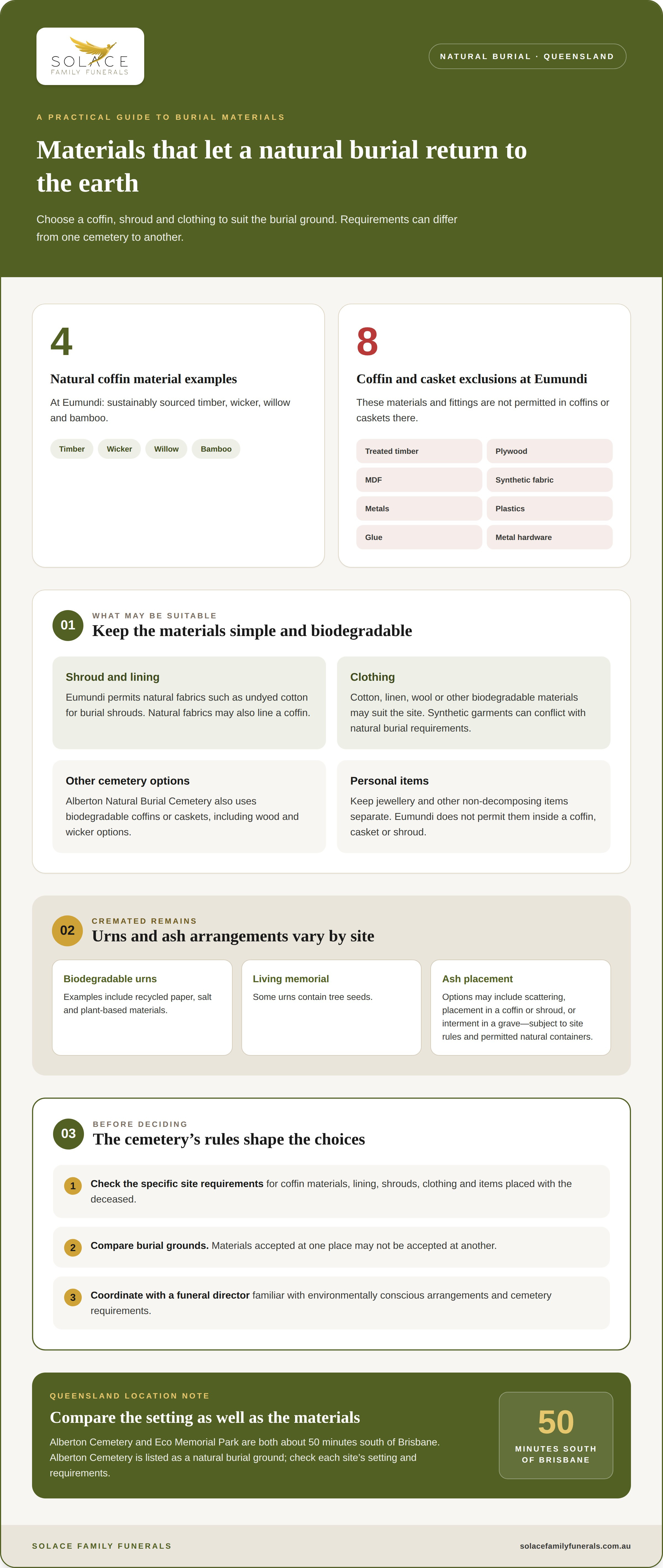
For a natural burial, the coffin, shroud and clothing need to meet the burial ground’s requirements. At Eumundi Cemetery, permitted coffins and caskets use natural, untreated materials, including sustainably sourced timber, wicker, willow or bamboo. Natural fabrics, such as undyed cotton, may line a coffin or form a shroud. These choices can help preserve the character of the burial area while allowing materials to break down naturally.
Eumundi’s requirements exclude treated timber, plywood, MDF, synthetic fabric, metals, plastics, glue and metal hardware from coffins and caskets. Only natural fabrics, such as undyed cotton, are permitted for burial shrouds there. Clothing can also be chosen with the site in mind: cotton, linen, wool or other biodegradable materials may be suitable, while synthetic garments can conflict with natural burial requirements. A simple garment chosen with care can still make the farewell personal and respectful.
Alberton Natural Burial Cemetery also uses biodegradable coffins or caskets, including options made from wood or wicker. Materials vary between sites, so the cemetery’s rules determine which coffin, lining, shroud and clothing are suitable. Keep jewellery and other non-decomposing personal items separate from the burial materials; Eumundi does not permit them inside a coffin, casket or shroud.
Families may also choose a biodegradable urn for cremated remains. Recycled paper, salt and plant-based materials are examples, and some urns contain tree seeds for a living memorial. Ash-scattering options can vary between natural burial areas, so check the cemetery’s arrangements with your funeral director. They may also be placed in a coffin or shroud, or interred in a grave after burial, if their container uses permitted natural materials.
If you’re considering a farewell alongside these choices, talk through funeral arrangements with a compassionate guide.
Choosing a funeral director
For a natural burial, choose a funeral director who understands green funeral practices and cemetery requirements. That knowledge helps connect your family’s wishes with the practical arrangements, from preparation through to the graveside farewell. The key is not simply choosing a biodegradable coffin; the burial ground’s rules also shape what can happen.
Start by clarifying the kind of farewell your family wants. A director should be able to discuss whether you’re considering burial, a service at the graveside, or a separate memorial. If your family is weighing burial against cremation at a crematorium, make sure the differences are explained plainly, without pressure. Your preferred setting, service and form of remembrance should guide the conversation.
Then consider how the arrangements will align with the chosen cemetery’s rules. For example, the site may set requirements for biodegradable materials, clothing, grave markers and items placed with the deceased. Bamboo or wicker may be suitable at one burial ground, while another has different material restrictions. A funeral director can coordinate the funeral arrangements with the cemetery, helping your family keep the details aligned.
Discuss preparation openly, including whether embalming is part of the proposed arrangements. Green funerals commonly seek to avoid embalming, but the practical approach depends on the family’s wishes and the cemetery’s requirements. Ask for each step to be explained in plain language, including who coordinates the burial booking, transports the deceased and leads the service. Clear responsibilities can make decisions easier at a difficult time.
Before settling on an arrangement, make sure the director has understood your priorities, such as a simple graveside gathering or a natural memorial. A written plan can record the choices and give relatives a shared reference. The clearest takeaway is to look for knowledge of green funeral arrangements, careful coordination with the burial ground, and communication that leaves your family understanding what happens next.
What are Queensland’s laws and regulations for green burials and funerals?
Queensland has no single, unified definition of natural burial. In practice, the cemetery’s conditions shape choices about burial materials, grave markers and ashes. Treat those site requirements as central to planning, rather than assuming every natural burial ground follows the same rules.
At Eumundi Cemetery’s natural burial area, coffins and caskets must use permitted natural, untreated materials. The rules exclude treated timber, plywood, MDF, synthetic fabrics, metals, plastics, glue and metal hardware. Only natural fabrics, such as undyed cotton, are permitted for shrouds. Synthetic clothing, watches, jewellery, electronic devices, possessions and bedding cannot be placed inside a coffin, casket or shroud there.
Ashes may be scattered in Eumundi’s natural burial area without Council approval, and families choose when to scatter them. They can also be placed inside a coffin or shroud during burial, or interred in a natural burial grave later. In both cases, the ashes container must be made from a material permitted at the site. Fresh flowers may be placed on newly established graves, but plastic or fabric flowers are not allowed.
Other practical conditions affect how families plan. Eumundi’s natural burial sites are allocated in sequence when the burial is booked, so families cannot choose or reserve a grave beforehand. No headstone or other grave marker can be placed on the grave. These are cemetery-specific conditions, not a universal description of every Queensland burial ground. NDAN guidance suggests natural burial graves have no more than 1 metre of soil above the body; this is guidance, not a Queensland-wide legal requirement.
Before arrangements are made, identify the cemetery and align the planned materials, memorial and ashes choices with its rules. For support planning a graveside farewell, discuss burial arrangements with a funeral director.
Solace Family Funerals
If you’re weighing a natural burial against other ways to farewell someone, Solace Family Funerals can help you consider what matters to your family. A Family Viewing offers time together before the farewell, while a Full Service Memorial brings people together to remember someone. Direct Cremation and Full Service Cremation are also options for families considering cremation instead of burial.
You can talk through the kind of farewell you have in mind and the choices that feel right for your family. There’s no need to have every detail decided before starting the conversation. If you’d like to discuss your options, contact Solace Family Funerals.
Take the next step at your own pace
Planning green funerals in Queensland can begin with a conversation about what feels meaningful to you and your family. You don’t need every decision settled at once. A useful first step is to share your wishes with someone you trust and write down the priorities you want your family to understand. This can give them a clearer starting point when it’s time to make arrangements.
If you’re ready to talk through your family’s circumstances, Solace Family Funerals can help you consider the next steps and the kind of farewell that feels right. A conversation can help bring your wishes into focus, without pressure to have everything decided beforehand. Contact Solace Family Funerals to discuss your options, and take the next step when you feel ready.
Frequently Asked Questions
What is a Green Burial?
A green burial is an earth burial planned to support natural decomposition and reduce environmental disturbance. Families typically choose biodegradable burial materials and avoid embalming, concrete vaults and items that won’t break down naturally. The exact meaning can vary between Australian burial grounds, so the term alone doesn’t tell you which materials, grave markers or preparation methods a particular cemetery permits.
What is a green funeral in Queensland?
A green funeral in Queensland is a farewell planned to reduce environmental impact, often alongside a natural burial. Families may consider transport, preparation, service materials and memorial choices, as well as the burial itself. There’s no single, unified Australian definition, so the cemetery’s requirements and your family’s priorities help shape what a green funeral means in practice.
Where are natural or green burial grounds in Queensland?
Queensland locations include Alberton Cemetery on the Gold Coast, Eumundi Cemetery on the Sunshine Coast and Nikenbah Natural Cemetery outside Hervey Bay. Eco Memorial Park is also in the Gold Coast area. Their settings and burial conditions differ, so location can affect family travel and the memorial choices available. For example, Eumundi’s natural burial area is a forested part of the cemetery.
How much does a green funeral cost in Queensland?
The cost depends on the cemetery and the arrangements your family chooses. Factors can include the burial plot, coffin or shroud, transport, preparation and whether you hold a service or memorial gathering. A simple farewell may involve different arrangements from a formal ceremony. Burial-ground fees also vary by cemetery, so consider the full set of choices rather than one item alone.
How do green funerals compare with traditional burials and cremations in cost and environmental impact?
A natural burial may avoid some conventional items, such as embalming and concrete vaults, while using biodegradable materials. That can affect costs and environmental considerations, but it doesn’t mean burial is always more sustainable or less expensive than cremation. Cremation also has environmental impacts, and the comparison depends on the method, materials, transport and memorial choices involved.
How do you arrange a green funeral in Queensland, step by step?
Begin by discussing the person’s wishes with close family and identifying a suitable burial ground. Then contact a funeral director familiar with green arrangements to coordinate the booking and explain the cemetery’s requirements. Decide on the farewell format, preparation preferences, permitted coffin or shroud materials, clothing and memorial. Finally, settle the practical details with the director and cemetery so the arrangements align.


