

A public-hospital transfer is included in a no-service cremation package on the Gold Coast. For a transfer of a deceased person on the Gold Coast, extra fees can depend on the collection location and time, as well as choices such as viewing or the type of container. The transfer is one part of the arrangements, and understanding what’s included can make the costs easier to follow.
It’s understandable if practical details feel like a lot to take in while you’re grieving. This article explains how transfers from public hospitals work, what may affect the total, how to compare funeral arrangements and what information forms may require. You’ll have a clearer picture of the process and decisions involved, so you can consider the next steps at a pace that feels manageable.
Key Takeaways
- A transfer from a public hospital is included in a no-service cremation package, while the collection location and time can affect extra fees.
- Compare providers by looking at what the quoted amount includes, any additional charges and whether GST is included.
- Before estate forms are lodged, clarify how the property was held and gather the relevant title and death records.
- Understanding the difference between a simple cremation and options such as a family viewing can help you choose arrangements that suit your family.
Transfer of the deceased from a public hospital
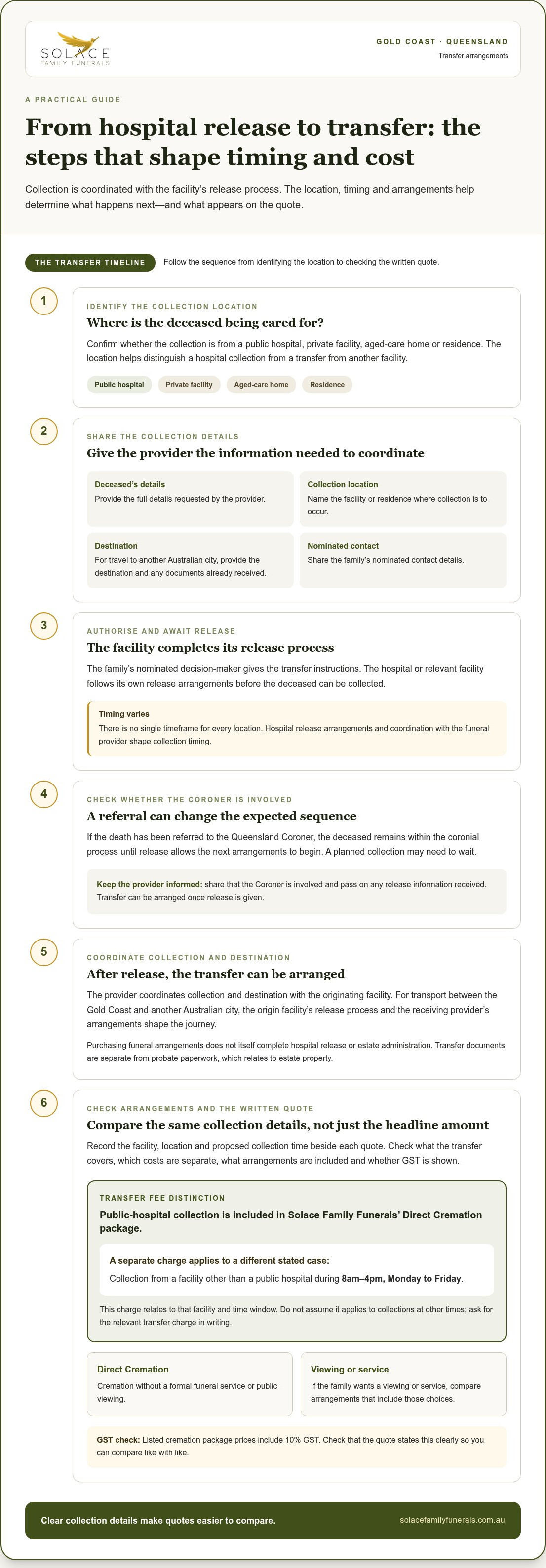
A public-hospital collection is included in Solace Family Funerals’ Direct Cremation package. The collection timing depends on the hospital’s release arrangements and coordination with the funeral provider.
Queensland transfer rules and authorisation
Transfer authorisation is the instruction that allows a funeral provider to collect the deceased. The family’s nominated decision-maker gives the instructions, while the hospital completes its release process. For deaths at home or in aged care, the relevant facility’s release arrangements also shape collection timing. There’s no single timeframe for every location. Acting promptly helps organise collection and keeps transfer documents separate from probate paperwork, which relates to estate property.
The person arranging the funeral should provide the deceased’s details, collection location and destination. The facility then follows its process before releasing the deceased. Purchasing funeral arrangements doesn’t itself complete hospital release or estate administration.
Coroner referral before transfer
A Coroner referral means the death is being considered through the coronial process before ordinary funeral transfer arrangements proceed. The deceased remains within that process until release allows the next arrangements to begin. This can change the sequence families expected, so a planned collection may need to wait.
Keep the funeral provider informed that the Queensland Coroner is involved, and share any release information received. Once release is given, the family can arrange transfer to the chosen funeral provider and discuss next steps. The Coroner’s involvement concerns the death investigation; it doesn’t resolve probate or transfer ownership of estate property.
Arranging a Gold Coast transfer
Arranging a transfer of a deceased person on the Gold Coast means coordinating release, collection and destination. Start by identifying whether the deceased is at a public hospital, private facility, aged-care home or residence. Then give the funeral provider the deceased’s full details, location and the family’s nominated contact. This information helps distinguish a hospital collection from a transfer from another facility.
For transport between the Gold Coast and another Australian city, provide the destination and any documents already received. The origin facility’s release process and the receiving provider’s arrangements shape how the journey is coordinated. If the death was referred to the Coroner, release must come before transfer. Families can then discuss whether Family Viewing or other arrangements are appropriate.
Additional transfer fees by time and facility
The collection location can change the transfer charge. A transfer from a facility other than a public hospital during 8am-4pm Monday to Friday carries a charge. This is a distinct cost to identify in the written quote, rather than assuming every collection is priced alike. The facility type and collection time help explain why transfer costs may differ.
For a useful comparison, record the collection details beside each quote: the facility, its location and the proposed collection time. For example, note whether the deceased is at a public hospital or another facility, then compare the transfer line item on each quote. This makes differences easier to understand and reduces the chance of overlooking a separate charge.
Ask for the total to show what the transfer covers and which items are separate. A quote should distinguish collection from other funeral costs. If the family changes the collection location or timing, ask for the revised quote in writing. Keep updated documents together, especially if the estate will pay the account.
The price depends on the case and is provided after a quote request; the collection location, timing and selected arrangements affect the total. Don’t assume the weekday daytime charge applies to a collection at another time. The stated charge covers a specific facility and time window, so use those details when comparing quotes rather than applying them to every situation.
A simple record can help you keep the conversation clear: note who provided each quote, the collection details, the included transfer and any separate charges. This gives family members a shared point of reference while arrangements are being made. For a clearer view of available funeral arrangements, explore funeral arrangement information.
Choosing and comparing providers
Compare written quotes by checking what each total covers, not just the headline amount. One quote may group several arrangements together, while another lists each item separately. Compare the same collection details and requested arrangements to see whether a difference reflects the scope of care or simply how charges are presented.
Look for clear descriptions of included services, optional choices and additional charges. A useful comparison records:
- The collection details and any transfer charge.
- Which arrangements are included in the quoted total.
- Whether optional choices appear as separate charges.
- Whether the quoted figure includes GST.
Listed cremation package prices include 10% GST. Check whether the quote states this clearly, so you can compare like with like. The price depends on the case and is provided after a quote request; collection details and selected arrangements affect the total. A quote that separates these elements can make the cost easier to understand without assuming every family needs the same arrangements.
Consider the type of farewell being arranged, too. Direct Cremation means cremation without a formal funeral service or public viewing. A family wanting a viewing or service should compare arrangements that include those choices, rather than treating an unattended option as equivalent.
If you’re the executor or estate representative, keep the quotes and related documents together. Record which provider supplied each quote, what it includes and the date it was prepared. This gives family members and anyone managing the estate a clear basis for discussing costs. It also helps prevent confusion if arrangements or requested options change before a decision is made.
Information needed before lodging forms
Estate transfer forms concern property ownership, not the deceased person’s collection. Start with a current title search: it shows the registered interest and whether the deceased was an owner, leaseholder or mortgagee. It also identifies sole ownership, tenancy in common or joint tenancy. These details determine which documents and arrangements apply.
Ownership type matters. Sole ownership or a tenancy in common generally requires probate before the estate’s interest can be dealt with. With joint tenancy, the deceased owner’s share passes to the surviving owner through survivorship; a Record of Death records that change. For estate property going to a beneficiary or being sold, the executor lodges a Transmission Application with Titles Queensland first.
Gather supporting evidence before lodging forms. Missing original death certificates can create administrative roadblocks. Unpaid land tax can create a statutory charge on estate property, and Titles Queensland will reject a transfer until the debt is cleared. Outstanding council rates and water bills can also delay arrangements, so include them in the estate’s records.
For a deceased lessee in a Queensland retirement village, information may come from the registered lease or a current title search. The scheme operator provides that information free of charge. Titles Queensland’s online questions can indicate which forms to lodge, but they don’t cover every situation or provide an exhaustive list. Titles Queensland advises confirming required forms with a solicitor before submission.
Before lodging, organise the title details, original death certificate, probate documents where required, supporting evidence and payment of the lodgement fee. If the paperwork is being handled alongside funeral arrangements, discuss funeral arrangements as a separate part of the process.
Solace Family Funerals: Direct Cremation
Solace Family Funerals offers Direct Cremation for families seeking a simpler farewell without a formal service. If you would like time together before cremation, Family Viewing may suit your wishes. Full Service Cremation and Full Service Memorial offer other ways to gather and remember someone, with the farewell shaped around your family.
Once you understand the collection arrangements and any additional charges, the next step is choosing a farewell that feels right. You can discuss the options with Solace Family Funerals and consider which arrangements best reflect your needs. There’s no need to settle every detail at once.
For a gentle conversation about your options, contact Solace Family Funerals.
Take the next step at your own pace
Arranging a transfer of a deceased person on the Gold Coast is one part of a much larger and deeply personal time. You don’t need to decide every detail at once. Begin with what would feel most supportive for your family: a quiet farewell, time to gather, or a service that brings people together.
Solace Family Funerals offers Direct Cremation, Family Viewing and Full Service Cremation. These options give families different ways to shape a farewell around their wishes, from a simple arrangement to a gathering with loved ones. The right choice is the one that feels considered and manageable for you.
If you’d like to talk through what happens next and which arrangement may suit your family, contact Solace Family Funerals. You can take the conversation one step at a time, with space to ask questions and make decisions when you’re ready.
Frequently Asked Questions
What does transferring a deceased person on the Gold Coast involve?
A transfer of a deceased person on the Gold Coast involves arranging collection and transport to the place where the next arrangements will take place. The collection may be from a hospital, residence or aged-care facility. The family’s chosen arrangements shape the destination and what happens afterwards. This transport is separate from estate matters such as probate or registering property ownership.
How much does deceased person transport cost on the Gold Coast?
The cost depends on the collection location, timing, distance travelled and the arrangements selected. A public hospital collection may be treated differently from a collection at another facility, so compare what the quoted amount includes. If transport forms part of a funeral arrangement, look for it in the written inclusions rather than assuming it is a separate charge or included in every option.
Which Gold Coast funeral homes provide deceased transfer services?
Solace Family Funerals includes necessary transfers in its Direct Cremation arrangements. This can help families who want the collection and cremation arrangements handled together, rather than coordinating transport separately. The funeral home also offers Family Viewing and Full Service Cremation for families considering a farewell with time together or a formal service. The right option depends on the kind of arrangements your family wants.
Are there extra costs or risks for long-distance or after-hours deceased transfers?
Distance can affect charges: transfers more than 70 km from Solace Family Funerals’ Gold Coast funeral home incur additional charges. After-hours transfers are free, including overnight, weekend and public-holiday collections. The practical consideration for a longer journey is coordinating the collection point and destination so the arrangements are clear. Share both locations when discussing the transfer and its associated costs.


