
If you’re facing what to do when someone dies at home on the Gold Coast, you don’t need to decide on a funeral straight away. If the death was unexpected, call 000; if it was expected, contact the person’s doctor or palliative care team so the death can be formally confirmed and the necessary paperwork arranged.
It can be hard to know what to do first when someone dies at home on the Gold Coast, especially while you’re grieving and supporting others. The immediate priority is to involve the right people, not to make every funeral decision at once.
This guide covers the first steps, when a funeral director can help and what happens if the Coroner is involved. It also explains which decisions can wait, how death certification and registration fit into the process, and how to move forward at a manageable pace.
Key Takeaways
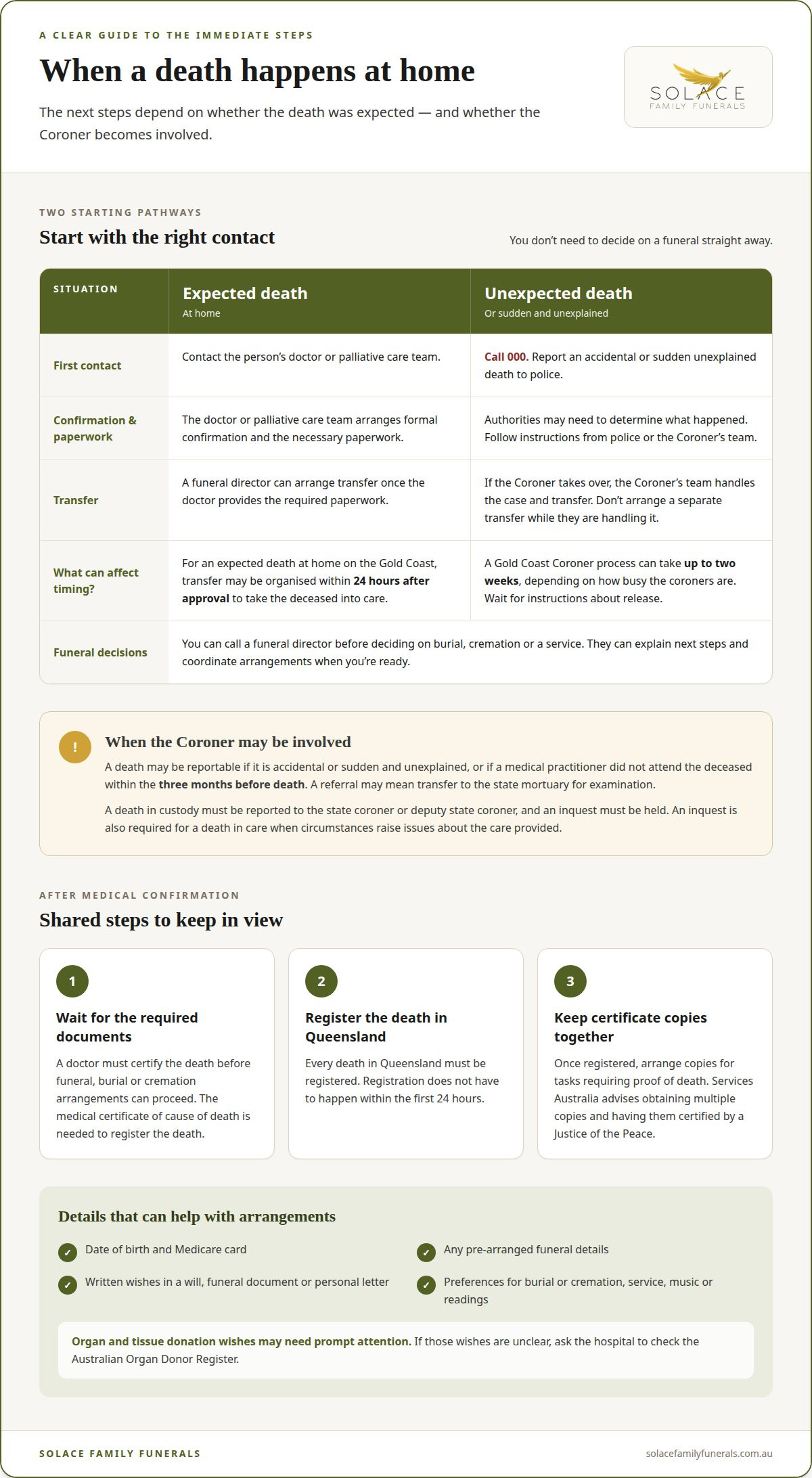
- If the death was unexpected, call 000; if it was expected, contact the person’s doctor or palliative care team to arrange formal confirmation.
- You don’t need to settle funeral arrangements immediately. A funeral director can explain the next steps and help coordinate arrangements when you’re ready.
- Make sure the death is certified and registered in Queensland, and find out how to obtain certified copies of the death certificate for follow-up tasks.
- An unexpected or unexplained death may involve the Coroner. Knowing what can prompt a referral can help you understand why the next steps may differ.
When does a funeral director need to be involved?
- Contact a funeral director after the death has been formally confirmed. In Queensland, transfer to a funeral director’s mortuary can take place once the doctor provides the required paperwork, which may include a medical cause of death or life extinct document. You can call before deciding on burial, cremation or a funeral service. Explain whether the death was expected and what has happened so far.
- You don’t need to settle funeral choices before making that first call. A funeral director can explain next steps, discuss how transfer is coordinated, and help arrange burial or cremation. Tell them if family members need time together or have questions about timing. For an expected death at home on the Gold Coast, transfer may be organised within 24 hours after approval to take the deceased into care.
- Check the person’s will, funeral documents or personal letters for written wishes. Share any preferences about burial, cremation, a service, music or readings. Organ and tissue donation wishes may need prompt attention after death. If those wishes are unclear, ask the hospital to check the Australian Organ Donor Register.
- If there are no instructions, family members can consider burial or cremation with guidance from the funeral director. The City of Gold Coast does not operate a crematorium, so the funeral director arranges cremation. For a burial at a Gold Coast cemetery, the director contacts the City to book and discuss the preferred cemetery. You can also consider service details such as the location, readings and personal touches, or setting up an online memorial with Remembering You to share memories and honour their legacy.
- Gather the person’s date of birth, Medicare card and any pre-arranged funeral details. These can help with arrangements and paperwork. In Queensland, every death must be registered. Funeral directors typically work with doctors and government departments on registration paperwork. Keep the death certificate and related documents together as they become available.
Obtaining and certifying death certificate copies
When you feel ready, seek grief support from family, friends or a professional support service. You can take the practical steps one at a time while the required paperwork is completed.
Obtain medical confirmation and certification
If the death at home was expected, contact the person’s doctor or palliative care team to arrange formal confirmation and paperwork. A doctor must certify the death before funeral, burial or cremation arrangements can proceed. The medical certificate of cause of death records the cause and is needed to register the death. Wait for the required paperwork before arranging transfer.
Register the death
Make sure the death is registered with the Queensland births, deaths and marriages registry. All deaths in Queensland must be registered, but registration does not have to happen within the first 24 hours. The medical certificate of cause of death is required for registration. Keep the details used for registration consistent with the deceased’s identification and medical documents.
- Once the death is registered, arrange copies of the death certificate for tasks that require proof of death. Services Australia advises obtaining multiple copies and having them certified by a Justice of the Peace. Keep the original certificate and certified copies together, and note where each copy is sent. This can help you manage separate requests without repeatedly searching for documents, especially when closing accounts or navigating estate administration with legal practices such as The Village Law Firm.
- If the death was unexpected, call 000. For an expected death in hospital, speak with hospital staff about the medical paperwork; in an aged care facility, staff arrange for a doctor to complete paperwork for burial or cremation. After certification, ask which documents will be issued and who will handle registration. If paperwork feels difficult to manage alongside funeral arrangements, you can talk through the practical next steps with a funeral director.
Coroner involvement
To arrange transport from a Gold Coast home, contact a funeral director after the doctor provides the required paperwork. If the Coroner takes over, the Coroner’s team handles the case and transfer.
Arrange coroner referral and mortuary transfer
Report an accidental or sudden unexplained death to police. A death may also be reportable if a medical practitioner did not attend the deceased within the three months before death. If the death is referred to the Coroner, the deceased may be transferred to the state mortuary for examination. Don’t arrange a separate transfer while the Coroner’s team is handling the case.
Understand coroner investigations
Ask police or the Coroner’s team what happens next, and keep any information they provide. An unexpected death may be referred so the cause can be determined. On the Gold Coast, this process can take up to two weeks, depending on how busy the coroners are. The investigation may affect when funeral arrangements can proceed, so wait for instructions about release.
- Know who must report a death. Under the Coroners Act 2003, people aware of a reportable death must report it if they don’t think it has already been reported. If you’re unsure whether another person has notified authorities, raise the concern with police. This duty applies to reportable deaths, not every death at home.
- Some circumstances have specific coronial requirements. A death in custody must be reported to the state coroner or deputy state coroner, and an inquest must be held. An inquest is also required for a death in care when circumstances raise issues about the care provided. A death resulting from police operations can only be reported to the state coroner or deputy state coroner.
- When you’re ready, update friends and family using information confirmed by the authorities. The release process and timing of funeral arrangements depend on the Coroner’s investigation. Once the deceased is released, funeral arrangements can proceed when the necessary paperwork is in place.
Initial steps after someone dies at home
- If the death is unexpected, call 000 and explain what has happened. Emergency services can guide you through immediate steps. In Queensland, accidental or sudden unexplained deaths should also be reported to police. Share what you know about the circumstances, including any known medical condition, and follow the instructions given. Don’t move the deceased unless emergency personnel direct you to do so.
- For an expected death, contact the person’s doctor or palliative care team. Arrange for the death to be formally confirmed and the necessary paperwork completed. If the usual doctor is unavailable, another medical professional or emergency services can arrange certification. Give the attending professional clear information about the person’s health and the events leading up to their death.
- Ask the doctor which paperwork is needed before the deceased can be transferred. After an expected death at home, the family may spend several hours with their loved one before arranging transfer. This can give you time to say goodbye, contact close friends and decide who should be present. A funeral director should not move the deceased before the doctor provides the required paperwork.
- Choose one family member to keep a record of key details and calls. Note the names of professionals who attend, their advice and any documents they provide. Ask relatives or close friends for support while the medical steps are underway. If your family would prefer a quiet moment together, let others know when you’re ready to share an update.
- Once the medical cause of death or life extinct document is issued, contact a funeral director to discuss transfer into their care. They can explain the immediate practical steps and help coordinate arrangements. If you’d like support with what happens next, speak with a funeral director about arranging a transfer. Keep the doctor’s paperwork accessible, as it helps move the process forward.
Solace Family Funerals: Direct Cremation
Once the required steps are underway, Solace Family Funerals can help you consider the arrangements. For cremation without a full service, ask about Direct Cremation. If you’d like family to gather or want a ceremony, options include Family Viewing, Full Service Cremation and Full Service Memorial.
Take time to consider what feels right for your family and the person who has died. The next step is a conversation about the arrangement you’re considering and the practical details involved.
Contact Solace Family Funerals to discuss the available options.
Take the next step at your own pace
After a death, even a small decision can feel weighty. You don’t have to manage every conversation or detail alone. Ask someone you trust to sit with you, note what matters to your family and help share those wishes when you’re ready.
If you’re deciding what to do when someone dies at home on the Gold Coast, let the next conversation focus on what matters to you rather than settling everything at once. Explain how you hope the farewell will feel, ask practical questions and take time to understand your options. A thoughtful conversation can make the next decision clearer.
Contact Solace Family Funerals for support and talk through a next step that feels right for your family. You can move forward one decision at a time.
Frequently Asked Questions
What happens after transfer into care?
After the transfer, the funeral director will discuss your preferred arrangements and the information needed to plan them. You might talk about burial or cremation, who should take part, and choices such as readings, music or a venue. If relatives have different views, a family conversation can help clarify the wishes to share. You can work through these decisions gradually.
What happens when someone passes away at home in Australia?
The next steps depend on whether the death was expected. For an expected death, contact the person’s doctor or palliative care team to arrange confirmation and medical paperwork. If the death was unexpected, call 000 and follow emergency services’ instructions. Once the death is medically certified, the necessary registration and funeral arrangements can be addressed.
Who reports the death to the Coroner?
In Queensland, anyone who knows about a reportable death must report it if they don’t think it has already been reported. Report accidental or sudden unexplained deaths to police, who can pass information through the appropriate process. If you’re unsure whether authorities have been notified, tell police what you know. A reportable death may then be referred to the Coroner for investigation.
Who do you need to notify first?
First, contact the appropriate medical or emergency service: the doctor or palliative care team for an expected death, or 000 for an unexpected death. Once immediate steps are underway, let a trusted relative or friend know so you have support. If the deceased received a payment from Services Australia, it must be told within 28 days. Other notifications can be handled as you’re ready.
What should you do immediately when someone dies at home on the Gold Coast?
For an unexpected death, call 000 and explain the circumstances. If the death was expected, contact the person’s doctor or palliative care team to arrange confirmation. Keep the doctor’s paperwork accessible and don’t arrange transfer before it’s issued. You can ask a trusted person to help make calls or be with you, while you take a moment to say goodbye.
When should you call 000 after a death at home in Queensland?
Call 000 when someone dies unexpectedly at home, particularly if they weren’t under medical care for a known condition. Tell the operator what happened and follow their directions. An accidental or sudden unexplained death should also be reported to police. For an expected death, contact the person’s doctor or palliative care team instead, so they can arrange formal confirmation and the necessary medical documents.


