
A farewell without religious rites can still feel deeply personal. A non-religious funeral service on the Gold Coast can centre on the person’s life, with stories, music and reflection, while leaving room for cultural or spiritual elements that matter to the family.
It’s understandable to want a ceremony that feels true to the person who has died, while helping children and older relatives feel included and comfortable. A non-religious funeral service on the Gold Coast can be shaped around your family’s wishes, from the tone of the gathering to how people take part.
This guide explains what a non-religious funeral may include, how a funeral, memorial and direct cremation differ, and what to consider when choosing a setting and planning the service. You’ll also find practical ways to make the gathering welcoming for guests of different ages while keeping the focus on the person being remembered.
Key Takeaways
- Shape the farewell around the person’s wishes, choosing meaningful touches and a setting that suits the family’s needs.
- Understand how a funeral, memorial and direct cremation differ so you can consider which kind of gathering feels right.
- Learn how funeral directors coordinate transfer arrangements and the practical steps involved after a death.
- Plan for children and older relatives by considering how they can take part and what will help them feel comfortable.
What is a non-religious memorial service?
A non-religious memorial centres on stories, music and reflection rather than religious rites. A funeral director can help shape the farewell around the person’s wishes, the family’s needs and the available budget.
Planning and notifying guests with a funeral director
A funeral director can help arrange the venue, celebrant and service order, then coordinate practical details with your family. You decide the etiquette and can explain it in the invitation, including whether guests should expect a quiet tribute or a more informal gathering. For example, you could invite people to wear bright colours or bring a memory to share.
The memorial planning process with a funeral director
Planning can begin by explaining what would feel true to the person who died and what would help loved ones gather. A director can help organise a celebrant, readings, music and speakers, and coordinate the paperwork, venue and suppliers. If several people wish to speak, short contributions and a person connecting them can help the memorial move smoothly.
Arranging a non-religious funeral service from home
You can begin planning from home by contacting a funeral provider and describing the farewell you have in mind. A funeral director can guide the arrangements, including transfer into care, paperwork, death registration, permits and venue bookings. You can discuss personal details such as favourite books, framed photographs or potted plants, which may create a meaningful setting without buying single-use decorations.
Keeping the farewell personal and affordable
The cost depends on the arrangements you choose. Venue, flowers, transport, memorial items and catering can all affect the total, so decide which details matter most to your family. You might prioritise a celebrant and meaningful music, for example, while keeping decorations simple with family photographs. This helps ensure the arrangements reflect your priorities.
Funeral, memorial and direct cremation options
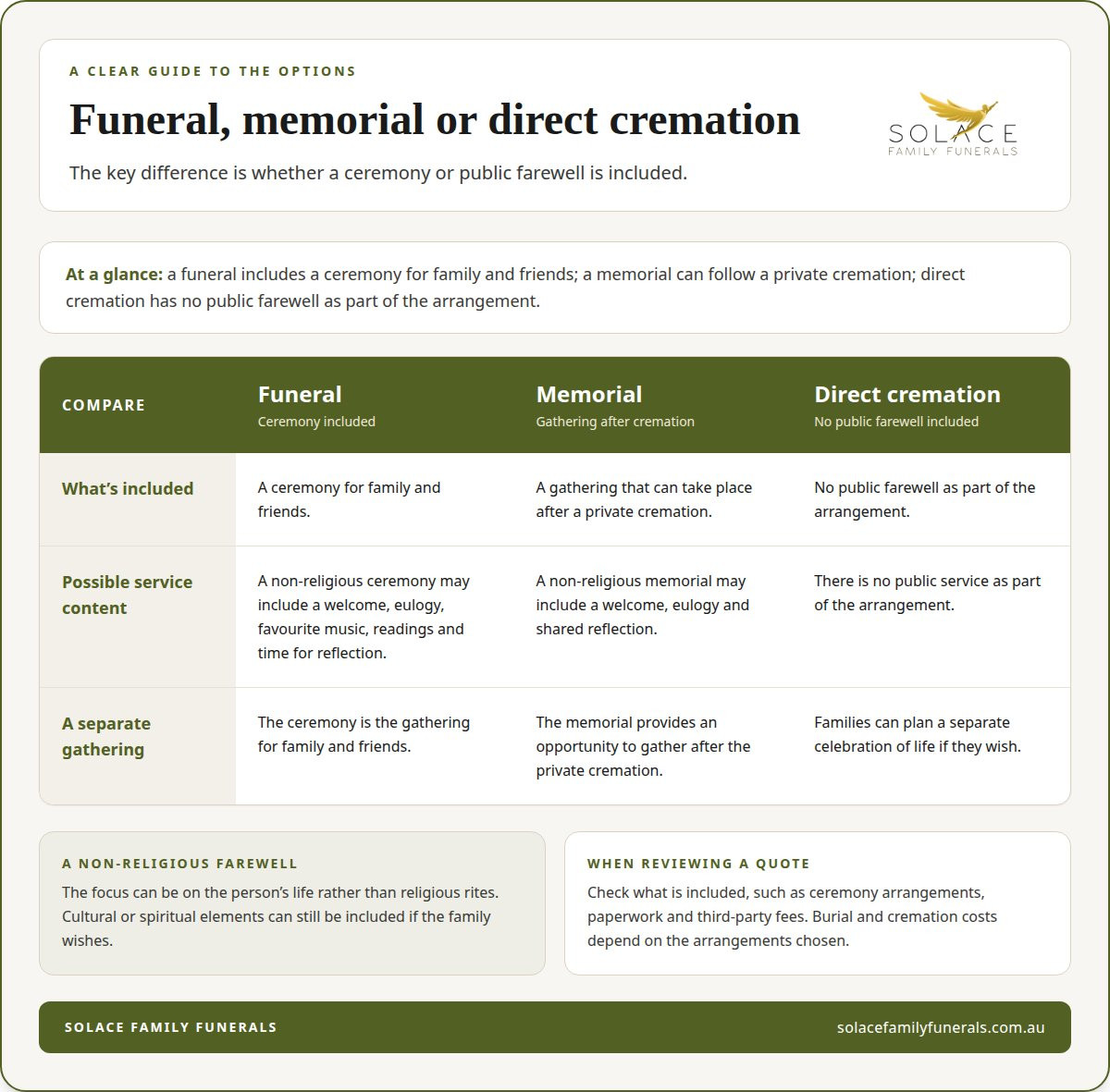
A funeral includes a ceremony for family and friends, while a memorial can take place after a private cremation. Direct cremation has no public farewell as part of the arrangement. Families can plan a separate celebration of life if they wish.
A non-religious memorial may include a welcome, eulogy and shared reflection, centred on the person’s life rather than religious rites.
Music, readings and shared memories
Choose music, poems and readings that reflect the person, such as a favourite song or a passage from a well-loved book. Guests might share memories, with a celebrant guiding the contributions so the ceremony feels considered and personal. Flowers, photographs and a tribute video can bring familiar details into the room. Some families also create keepsakes, such as a memorial card or a slideshow of photographs.
A yacht-based memorial may offer a distinctive setting for reflection. Consider how guests will board, move around and hear speakers, especially if older relatives are attending. Weather, seating and access all affect whether a vessel will be comfortable for your group.
Comparing costs, quotes and funeral packages
Burial and cremation costs depend on the arrangements, including the resting place, venue and transport. The Australian Competition and Consumer Commission explains that burial and cremation fees are typically added to the funeral director’s invoice as disbursements. When reviewing a quote, check what it includes, such as ceremony arrangements, paperwork and third-party fees.
A basic unattended arrangement generally centres on cremation without a public service; a full package may include transfers, a coffin, paperwork and a death certificate. In Queensland, arrangements can involve death registration, permits, venue bookings and coordination. A funeral home that arranges cremations or memorials can help plan a secular service; the ceremony may be formal or relaxed, depending on the family’s wishes.
What is a non-religious funeral?
A non-religious funeral remembers someone without following religious traditions or guidelines. It may be atheist, agnostic or humanist in tone, and can include cultural or spiritual elements if the family wishes. On the Gold Coast, the ceremony might bring together a welcome, eulogy, favourite music, readings and time for reflection.
A celebrant-led funeral is shaped around the person’s life and the family’s preferences. A religious service follows the traditions and rituals of a faith, while a non-religious celebrant can guide the ceremony without religious readings, prayers or rites. Families may still include a brief blessing or religious song if it would comfort those attending.
Collection and transfer are among the practical arrangements a funeral director coordinates after a death. The director can explain how the person is transferred into care, organise the required paperwork and coordinate the chosen service. Details such as the coffin, venue and whether the ceremony includes a viewing help determine the next steps.
Consider how guests will travel between the service and any gathering afterwards. A funeral director can help coordinate transport and venue details, while your family decides whether refreshments or a wake suit the occasion. For example, loved ones might gather at a community hall after the ceremony to share food and favourite stories.
A wake can continue the farewell in a quieter setting, giving guests time to talk personally rather than speak from a lectern. Refreshments can be simple, and a slideshow or printed photographs can give people a shared focus. If relatives are travelling from different parts of the Gold Coast, clear details about the service and gathering locations can make the day easier to follow.
Including children and older relatives
A meaningful farewell can make room for different ages without asking everyone to participate in the same way. Before the day, explain to children what will happen, such as who will speak, when music will play and whether the coffin will be present. A clear explanation helps them decide what feels manageable instead of being surprised by unfamiliar details.
Offer children a choice of small, optional roles. They might select a favourite song, place a flower beside a photograph or draw a picture for the family. They can attend with a trusted adult who can step outside with them if needed. Children do not have to speak publicly or stay for the whole ceremony; inviting them to participate makes their involvement personal, not compulsory.
For older relatives, consider comfort and access when selecting a venue. Check whether the route from the entrance to the seating is manageable, whether chairs offer support and whether guests will hear the celebrant. For an outdoor gathering, plan for weather, shade and seating. Clear directions and transport details can also help relatives arrive without confusion.
Families in Australia can include cultural or spiritual elements in a non-religious service. Discuss preferences beforehand, especially if relatives have different views about readings, music or rituals. A brief blessing, for example, may comfort some family members while the wider ceremony remains focused on stories and reflection. The aim is to honour the person and treat guests with care, not to ask everyone to grieve in the same way.
If you’re arranging a farewell with children or older relatives in mind, discuss a family-centred service plan that considers their comfort and involvement.
Solace Family Funerals
Solace Family Funerals can help turn your wishes for a non-religious farewell into clear, practical arrangements on the Gold Coast. The family-owned team can guide you through service choices and the details of planning a gathering that reflects your loved one.
Options include Direct Cremation, Family Viewing, Full Service Cremation and Full Service Memorial. These offer different ways to arrange cremation, a family farewell or a memorial gathering. You can talk through the tone, meaningful elements and practical details without having every decision made in advance.
For a calm conversation about your plans, contact Solace Family Funerals.
Take the next step at your own pace
Choosing a non-religious funeral service on the Gold Coast can start with a conversation about what matters most. You don’t need every detail settled. Begin with the feeling you hope the farewell will hold and the people you want to feel welcome and included.
It may help to note any wishes the person expressed, along with questions your family still has. You can talk through the options and decide what feels appropriate, without turning a personal goodbye into a list of obligations. The right choices are those that honour the person and feel manageable for the people left behind.
Solace Family Funerals can help you consider arrangements that fit your family’s wishes. If you’re ready to talk through the next step, contact Solace Family Funerals. A thoughtful farewell can take shape one decision at a time.
Frequently Asked Questions
Do I have to pay upfront?
Payment timing is a separate part of confirming funeral arrangements. Before proceeding, make sure you understand when payment is due and what the quote covers. Solace Family Funerals describes its pricing as all-inclusive, but cemetery burial plot and council fees are separate, and extra charges can apply for transfers beyond 70 kilometres or coffins over 110 kilograms.
How do I know you’re reputable?
Look for clear written information about the arrangements, costs and exclusions, along with respectful, direct communication. Solace Family Funerals describes its prices as all-inclusive and identifies exclusions such as cemetery fees, longer-distance transfers and heavier coffins. A useful sign of clarity is being able to understand what the quoted arrangements cover before you decide how to proceed.
Who should speak?
Choose someone who can speak comfortably about the person, whether that’s a relative, close friend or celebrant. They might share a short story, read a poem or introduce a favourite piece of music. If speaking feels too difficult, they can write something for another person to read. Agreeing on the speaker beforehand helps avoid uncertainty during the service.
What is a non-religious funeral service in Australia?
A non-religious funeral service on the Gold Coast honours a person without using religious rites or readings as its structure. It can still include cultural or spiritual elements chosen by the family. For instance, a ceremony might feature a celebrant, personal stories and music, with a brief blessing if it feels meaningful to those gathered.
How can a funeral director help arrange a non-religious funeral on the Gold Coast?
A funeral director can coordinate practical arrangements and help turn your preferences into a clear service plan. You can share details such as the person’s preferred name, a meaningful song and who may wish to speak. The director can help coordinate the arrangements and explain the next steps. For assistance from Solace Family Funerals, call 0422 510 105.
What venues on the Gold Coast host secular funeral services?
Possible settings include a chapel, crematorium, cemetery function room, community hall, garden or private venue. A family home may also suit a memorial without the coffin present. The setting affects practical details such as guest access, seating, sound and timing, so consider what will help people feel comfortable. For an outdoor location, plan for weather and access.


