
A greener farewell is often shaped by what is left out, not added. On the Gold Coast, natural burial uses a biodegradable coffin or casket and avoids embalming. Alberton Cemetery has the region’s only designated natural burial area. For families considering eco-friendly funerals on the Gold Coast, it’s one way to reduce the use of materials that don’t break down naturally.
Choosing a funeral while grieving can feel like a lot to manage. Take it one decision at a time, with clear information about what each option involves.
This guide explains natural burial, biodegradable coffin and clothing materials, and how choices about burial, cremation and memorial details can affect the environment. It also provides practical context for arranging a thoughtful farewell on the Gold Coast, so you can consider what feels right for your family.
Key Takeaways
- Understand what a natural burial involves and the practical considerations of arranging one around the Gold Coast and Brisbane.
- Compare biodegradable coffin materials, including timber, cardboard, bamboo, seagrass and wicker, to see which options may suit your wishes.
- Learn how burial, cremation and memorial choices can shape a funeral’s environmental impact.
- Explore ways to create a more considered farewell, from reducing printed materials to choosing a service format that feels right for your family.
What Is A Natural Burial?
A natural burial places a person in the ground in a biodegradable coffin or casket, using fewer materials that resist decomposition. Around the Gold Coast, Alberton Cemetery is the region’s only designated natural burial area, set among remnant eucalypt bushland. It is in the Gold Coast City Council Region and is also the closest natural green burial site to Brisbane. For Brisbane families, this offers a natural burial option within the broader Gold Coast region.
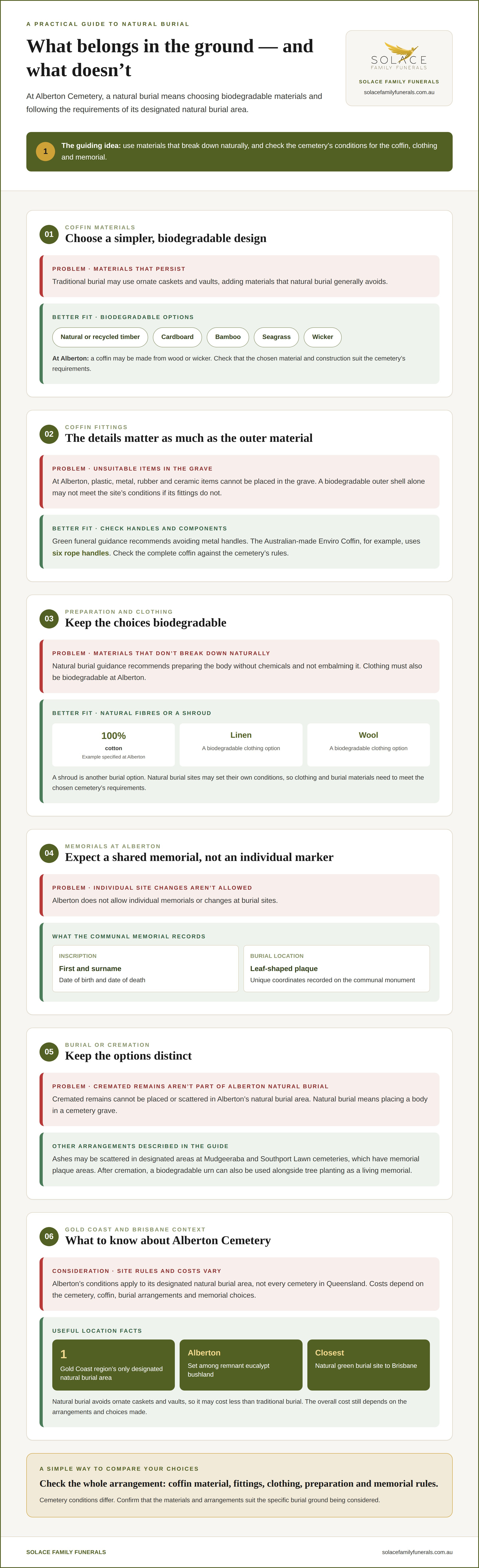
At Alberton, a coffin may be made from wood or wicker, and clothing must be biodegradable, such as 100% cotton. Natural burial guidance also recommends preparing the body without chemicals and not embalming it. Plastic, metal, rubber and ceramic items cannot be placed in the grave. These are the rules for the designated natural burial area at Alberton, rather than a general list of Queensland-wide requirements for every cemetery.
Memorial choices are different, too. Alberton does not allow individual memorials or changes at burial sites. Communal inscriptions include the person’s first and surname, date of birth and date of death. A leaf-shaped plaque on the communal monument records the unique coordinates of each burial location. Cremated remains cannot be placed or scattered in this natural burial area.
Sea burial is separate from scattering ashes in a cemetery, and Alberton’s rules do not set out sea-burial permit requirements. On the Gold Coast, ashes may be scattered in designated areas at Mudgeeraba and Southport Lawn cemeteries, which have memorial plaque areas. Natural burial, by contrast, means placing a body in a cemetery grave.
Costs depend on the cemetery, coffin, burial arrangements and memorial choices. Natural burial avoids ornate caskets and vaults, so it may cost less than traditional burial. Australia’s natural burial grounds include Alberton, Lismore Bushland Cemetery, Gungahlin Cemetery and sites in South Australia, Tasmania, Victoria and Western Australia. Each cemetery’s setting and approach to memorials can help shape a meaningful farewell.
Biodegradable coffin and casket materials
A biodegradable coffin can be made from natural or recycled timber, cardboard, bamboo, seagrass or wicker. These materials offer a simpler alternative to ornate designs while giving families a respectful way to honour a loved one. Coffin construction matters, too: green funeral guidance recommends avoiding metal handles. For example, the Australian-made Enviro Coffin uses six rope handles.
Material and finish can affect whether a coffin suits a particular natural burial ground. At Alberton, QLD 4207, natural burial rules exclude plastic and metal items from graves. That makes the coffin’s fittings, not just its outer material, an important consideration. A funeral director can coordinate the chosen coffin with the cemetery’s requirements, helping families make a considered choice without adding unsuitable components.
The choice depends on the material, construction and design. A plain cardboard coffin, for instance, differs from a wicker or timber model. Comparing these materials can help you choose an option that feels appropriate while keeping the funeral’s environmental footprint in mind.
Clothing can also be chosen with biodegradability in mind. Cotton, linen and wool are examples, and a shroud offers an alternative to a coffin. Each can provide a simple, personal way to make the farewell meaningful. Natural burial sites may set their own conditions for clothing and burial materials, so your choices need to meet the cemetery’s requirements.
After cremation, a biodegradable urn can be used alongside tree planting as a living memorial. The tree can provide a lasting place of remembrance, while the urn offers a considered way to return cremated remains to the earth.
Environmental impact of traditional burial and cremation
Burial and cremation affect the environment in different ways, and neither has one universal impact.
Burial and Cremation Emissions
Cremation uses energy and produces emissions, while burial involves land, materials and ongoing cemetery care. Technological changes are reducing emissions from the cremation industry, so the comparison can shift over time. Consider the whole arrangement, including the coffin, grave requirements and memorial, rather than treating the choice as a simple emissions ranking.
Environmental Impacts of Funeral Choices
Traditional burial may involve ornate caskets and vaults, adding materials that natural burial generally avoids. Cremation also produces emissions, though improvements in technology are reducing them. Green funerals aim to reduce environmental impacts, including the carbon footprint. The South Australian Environmental Protection Authority has produced a document on the sustainability debate between burial and cremation.
Green Burial Sites and Capacity
At Alberton Cemetery, grave locations are recorded by unique coordinates on a leaf-shaped plaque at the communal monument. Adult monumental sites may accommodate up to 2 bodies; lawn and lawn beam sites may accommodate up to 3. Access, coffin or casket size and environmental site considerations affect capacity. The natural burial area sits among remnant eucalypt bushland, where individual memorials aren’t permitted.
Low-Impact Funeral Products
Biodegradable options include natural or recycled timber, cardboard, bamboo, seagrass and wicker coffins. A shroud is another burial option, while cotton, linen and wool clothing can biodegrade. At Alberton, metal and plastic items aren’t allowed in natural burial graves, so fittings matter as well as the main materials. These choices can reduce persistent materials in the ground while respecting the cemetery’s conditions.
Eco-friendly funeral services on the Gold Coast and Northern Rivers
A sustainable farewell involves several decisions, not just the burial method. Around the Gold Coast, Alberton Cemetery has the region’s only designated natural burial area, while families also have access to regional options like Lismore Bushland Cemetery for natural burials across northern New South Wales. The right location depends on where family can gather and which cemetery’s approach feels meaningful for your eco friendly funerals Gold Coast arrangements.
A funeral director can coordinate cemetery arrangements and help align the service with your family’s environmental priorities. For a natural burial, this may involve choosing a biodegradable coffin and suitable clothing, and selecting a cemetery that restricts non-biodegradable items. Alberton sits among remnant eucalypt bushland, and its natural burial area does not allow individual memorials or changes to burial sites. These conditions shape the ceremony and remembrance choices.
Small service decisions can also reduce waste. A compact memorial card can replace several printed pieces, or an electronic order of service can be emailed to guests. Families can share flowers after the ceremony, donate arrangements where appropriate or compost them. Requesting minimal plastic wrapping and no floral foam can further reduce floral waste.
Travel and catering matter, too. A convenient venue, clear travel details and carpooling can help reduce guests’ travel impacts. RSVP numbers help organisers plan realistic catering, choose a simple menu and manage safe leftovers. These practical steps can make a service more sustainable without taking away from the personal meaning of the gathering.
Choosing a funeral director who understands green arrangements can help bring these details together, from cemetery requirements to service materials. If you’re considering a more sustainable farewell, discuss funeral arrangements with Solace Family Funerals to reflect your family’s wishes.
Solace Family Funerals
Solace Family Funerals can help you consider funeral choices with care and clear information. If you’re balancing environmental priorities with family wishes, a conversation can help clarify the kind of farewell you want and which service format may suit. Options include Direct Cremation, Family Viewing, Full Service Cremation and Full Service Memorial.
You don’t need to have every detail decided before talking it through. Sharing what matters to you, such as a quiet gathering or a meaningful memorial, can help shape the next steps. Solace Family Funerals can explain how its funeral and cremation services fit your preferences, without pressure to decide before you’re ready.
Contact Solace Family Funerals to discuss your family’s wishes.
Choose a farewell that reflects what matters
There’s no single right way to make a farewell more considerate of the environment. You can start by identifying what matters most to your family, whether that’s the setting, the materials used or how people gather to remember someone. Take time to make choices that feel personal, not perfect.
If you’re considering eco-friendly funerals on the Gold Coast, bring your priorities into the conversation early. Clear guidance can help you understand how your wishes fit together and which decisions need attention first, without pressure to settle every detail at once.
Contact Solace Family Funerals to talk through the kind of farewell you have in mind. A thoughtful conversation can be a gentle first step towards making arrangements that honour your family’s wishes.
Frequently Asked Questions
Why choose an eco-friendly funeral?
An eco-friendly funeral can reflect a person’s values while reducing avoidable material use and waste. It doesn’t promise zero environmental impact; it involves making deliberate choices about burial or cremation and the gathering. You might begin by deciding what matters most, such as a simpler ceremony, fewer printed materials or a remembrance centred on family rather than formal display.
What eco-friendly funeral options are available on the Gold Coast?
Options for eco-friendly funerals on the Gold Coast include natural burial or a cremation-based farewell with a family gathering or memorial. You can also make considered choices for the ceremony, such as using a digital order of service instead of printed copies. Start by deciding whether a burial place or flexibility in how and where family remembers the person matters more.
Which Gold Coast funeral homes offer green or natural funerals?
Solace Family Funerals is a Gold Coast funeral home offering cremation, burial and memorial arrangements. Its services include Direct Cremation, Family Viewing and Full Service Cremation, which includes a gathering before cremation. Alberton Cemetery is the local site for natural burial. A funeral director can help organise arrangements that respect the cemetery’s requirements and your family’s wishes.
How much do eco-friendly funerals cost on the Gold Coast?
Costs depend on the arrangements, including the service format, venue and cemetery fees. For arrangements through Solace Family Funerals, the price depends on the case and is provided after a quote request. Cemetery plot and council fees aren’t included in its package prices and vary by cemetery. A quote helps separate funeral arrangements from cemetery costs.
Are natural burials available near the Gold Coast, and where?
Yes. Alberton Cemetery has the Gold Coast region’s designated natural burial area, set among remnant eucalypt bushland. It is in the Gold Coast City Council Region, between Brisbane and the Gold Coast. Lismore Bushland Cemetery is another listed natural burial ground, in northern New South Wales. Location can affect how easily family and friends can attend or revisit.
How can a funeral director help plan and arrange an eco-friendly funeral on the Gold Coast?
A funeral director can help organise the service, coordinate burial or cremation arrangements, and shape the gathering around your family’s priorities. For families planning eco-friendly funerals on the Gold Coast, Solace Family Funerals offers options including Direct Cremation, Family Viewing and Full Service Cremation. If you’d like to talk through arrangements, call 0422 510 105 and explain what matters most to your family.


