

Children can attend a funeral in Australia; whether they should depends on their age, maturity and relationship to the person who died. Good funeral etiquette means preparing them by explaining what to expect, answering questions and arranging for another adult to support them. If they become unsettled, take them outside quietly.
It’s understandable to worry that a funeral may be difficult for a child, or that their presence might disturb others. There’s no single answer for every family, but some preparation can help you decide what feels right for your child and the people who are grieving.
This guide explains how to make that decision, whether acquaintances should attend, and how to offer condolences respectfully. It also covers cultural differences and ways to support bereaved family and friends after the funeral, when care and connection still matter.
Key Takeaways
- Decide whether a child should attend by considering their age, maturity and connection to the person who died, then prepare them for what to expect.
- Offer support beyond the funeral with a thoughtful message or practical help, while respecting the family’s need for space.
- When customs are unfamiliar, speak with the family or follow the cues of others, and respect any requests about clothing or flowers.
- If you weren’t close to the person who died, consider the family’s wishes before attending; if the funeral is private and you haven’t been invited, don’t go.
1. Supporting the bereaved after the funeral
Support shouldn’t end when the funeral service does. In the days afterwards, send a short text or handwritten letter to say you’re thinking of the family. A simple message such as, “I’m here to support you, and I can drop dinner over on Thursday,” offers warmth and a practical next step. Don’t expect a reply; grief can make even small conversations difficult.
Offer specific help rather than saying, “Let me know if you need anything.” Ask whether you can prepare a meal, collect groceries or help with household chores. Before visiting, contact the family and respect their need for privacy or quiet. If they welcome you, keep the visit brief unless they clearly want company. Friends can also help with practical tasks or funeral arrangements if the family asks.
A wake gives people a chance to share memories and continue offering sympathy. Listen without rushing to fill silences, and let the bereaved decide whether to talk about the person who died. You might say, “I remember how warmly they welcomed everyone,” then give the family room to respond. Don’t make the gathering about your own grief or expect the family to comfort you.
In Australia, compassion can continue after the funeral, including at a wake. A thoughtful letter or text can offer support while respecting the family’s space and privacy.
2. Cultural influences on Australian funerals
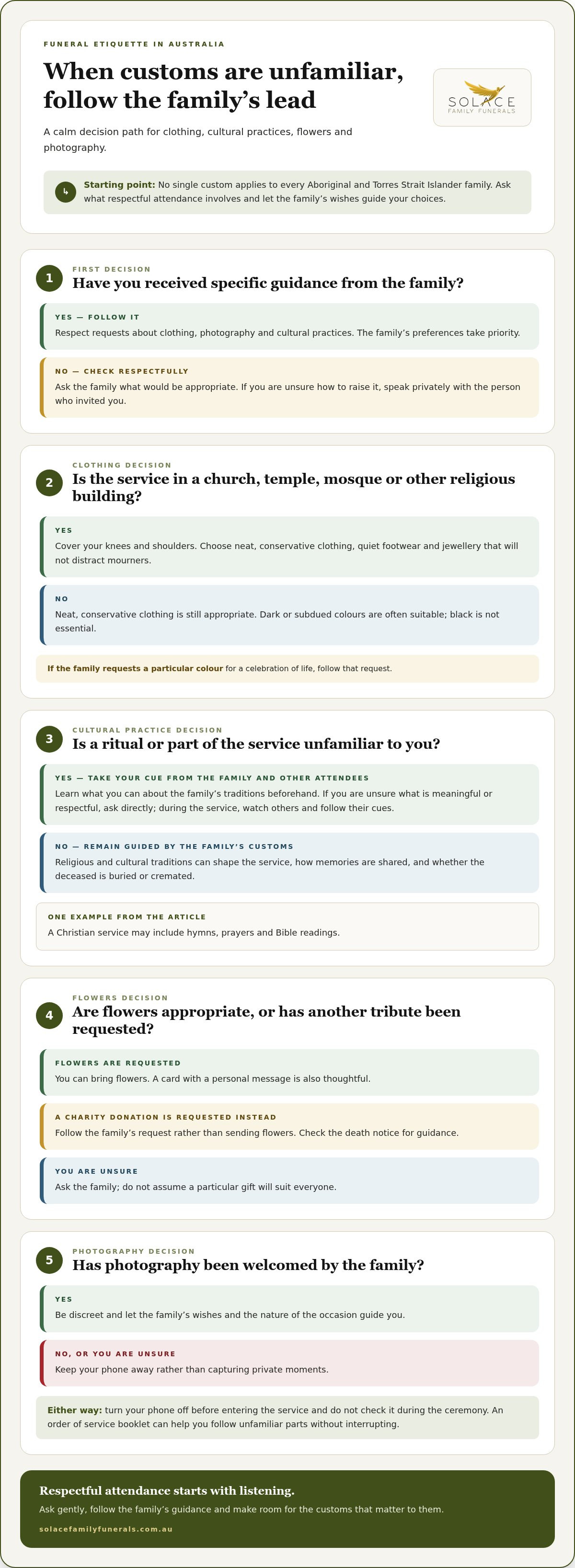
Yes, expectations can differ between Aboriginal and Torres Strait Islander communities and families. No single custom applies to everyone, so ask the family what respectful attendance involves. Follow their guidance about clothing, photography and cultural practices. If you’re unsure how to ask, speak privately with the person who invited you.
For a funeral in Australia, choose neat, conservative clothing; black isn’t essential. Dark or subdued colours are often appropriate, unless the family requests a particular colour for a celebration of life. At a religious service in a church, temple, mosque or other religious building, cover your knees and shoulders. Good funeral etiquette in Australia also means choosing quiet footwear and jewellery that won’t distract mourners.
Religious and cultural customs can shape the service, how people share memories and whether the deceased is buried or cremated. Learn what you can about the family’s traditions before attending, and ask directly if you’re unsure what would be meaningful or respectful. A Christian service may include hymns, prayers and Bible readings. If a ritual is unfamiliar, watch others and follow their cues. If you’re unsure whether flowers are appropriate, ask the family; follow any request for charity donations instead.
Turn your phone off before entering the service, and don’t check it during the ceremony. Be discreet with photos, guided by the family’s wishes and the nature of the occasion. If photography hasn’t been welcomed, keep your phone away rather than capturing private moments. An order of service booklet can help you follow unfamiliar parts without interrupting.
These details are part of funeral etiquette in Australia, but the family’s wishes should guide your choices. If you’re helping arrange a farewell, consider how a service can reflect the family’s wishes. Thoughtful planning can make room for customs, from the words spoken to the music and rituals included. Listening, asking gently and following the family’s lead can help you honour the deceased.
3. Offering condolences
At an Australian funeral, a simple “I’m sorry for your loss” is appropriate. If you knew the person, add one brief memory, such as how they welcomed you or made you laugh. Keep the focus on the family and the person who died, not your own experience. If you’re not close to the family, wait until after the service to introduce yourself.
Grief can make conversation difficult, so you don’t need perfect words. Listen, allow pauses and let the family decide whether to talk. A brief hug or gentle touch on the hand or arm may offer comfort if it seems welcome. If the family is overwhelmed before the service, wait until afterwards to offer sympathy.
Flowers, a handwritten card or a small gift can express care, but follow the family’s wishes. Read the death notice for requests, such as donating to a charity instead of sending flowers. If flowers are requested, you can bring them; a card with a personal message is also thoughtful. Don’t assume a particular gift will suit every family.
Practical help can be more useful than a general offer. Suggest preparing a meal, doing a household chore or helping with an arrangement. At a wake, listen as friends share memories and offer to help tidy up afterwards. These small acts can honour the person who died without adding to the family’s emotional load.
During the funeral service, arrive on time, silence your phone and avoid talking while others are listening. Follow the order of service booklet and the funeral director’s guidance, especially if you’re unsure what happens next. Take photos discreetly, and don’t joke unless it clearly suits the occasion. At a burial, follow the family’s lead and remain respectful. If children become unsettled, take them outside quietly.
4. Deciding whether to attend a funeral for someone you did not know well
If you knew the person through work, as a neighbour or through a friend, consider whether your presence would comfort their loved ones. Check the death notice or invitation for the family’s wishes. In Australia, families or funeral directors commonly send funeral invitations by text or letter. If the funeral is described as private and the immediate family hasn’t invited you, don’t attend.
Consider whether your attendance could upset someone. If there’s unresolved conflict or your presence may add strain, stay away and find another way to process your feelings. You could send a sympathy card, write a brief letter or offer condolences later. This gives the family space during a solemn occasion while still recognising their loss.
If illness, travel or work commitments prevent you from attending, a card or letter can express regret and sympathy. Keep your message simple: “I’m sorry I can’t be there, and I’m thinking of you.” Compassionate and bereavement leave in Australia generally applies only when the death is of an immediate family member. If leave isn’t available, a thoughtful message still lets the family know you care.
Arrive on time for the start stated in the invitation. Allow time to find the venue and a seat so you can enter quietly before the service begins. If you’re late, come in discreetly without interrupting the ceremony. Acquaintances and co-workers can sit or stand towards the back, or wherever space remains after family and close friends are seated.
Religious customs, the family’s privacy and your relationship with the deceased can all shape what feels respectful. You don’t need to know someone well to attend an open funeral, but follow the family’s wishes and avoid making the day about yourself. If you’re helping a family plan a farewell, explore funeral arrangement support that can help them shape a service around their needs.
Solace Family Funerals: Direct Cremation
Solace Family Funerals offers Direct Cremation for families considering cremation without a full service. If you’d like family to gather or hold a separate farewell, Family Viewing, Full Service Cremation and Full Service Memorial are also available. The right arrangement depends on how you want to remember the person and what feels manageable for those close to them.
These options can help put practical arrangements in place while keeping the family’s wishes at the centre. You can discuss the kind of farewell you’re considering and the support that suits your circumstances.
For a calm conversation about funeral arrangements, contact Solace Family Funerals.
Carry care into the next step
Funeral decisions can feel weighty because they involve both practical arrangements and the people you love. You don’t need to have every answer immediately. Start with what matters most to your family, then take the next step at a manageable pace.
Thoughtful funeral etiquette in Australia is less about getting every detail perfect and more about treating others with care. A quiet message, a respectful presence or a little practical help can mean a great deal. If you’re now arranging a farewell, Solace Family Funerals offers Direct Cremation, Family Viewing and Full Service Cremation, with options to suit different ways of gathering and remembering.
For a calm conversation about arrangements, contact Solace Family Funerals. You can take things one decision at a time, with care for the person who has died and the people carrying their memory.
Frequently Asked Questions
Should I take the kids with me?
Children can attend, and your decision can reflect their age, maturity and relationship with the person who died. Before going, explain in simple terms what they may see and hear, and give them time to ask questions. For example, tell them there may be quiet moments and people crying. If you’re unsure, consider whether they can manage the service with support from a trusted adult.
What is the etiquette for attending a wake or gathering after a funeral in Australia?
Follow the family’s lead, offer a brief expression of sympathy and give others room to share memories. If you’re unsure whether the gathering is open to you, follow the invitation or ask the person who invited you. Keep conversation considerate, avoid pressing the family for details and leave when the hosts indicate the gathering is winding down. A quiet offer to help tidy up can be thoughtful.
How do you RSVP or explain that you cannot attend a funeral in Australia?
Reply to the person who sent the invitation, using the same method where practical, and say plainly that you can’t attend. For example: “Thank you for letting me know. I’m sorry I can’t be there, and I’m thinking of your family.” If the funeral is private, respect that request rather than attending without an invitation. A sympathy card or letter can also convey your condolences.


