

The lowest quote isn’t automatically the right choice. To decide how to choose a funeral director, compare itemised quotes and look at how clearly each one explains what’s included, how arrangements will be handled, and whether the options fit your family’s wishes and budget. A funeral director can help coordinate practical details, leaving you with a clearer path through a difficult time.
It’s understandable if cost feels difficult to weigh alongside personal and family needs. You deserve a clear explanation of your options, without pressure to spend more than feels right. This guide explains how to compare quotes, assess the care and communication behind the service, and decide whether the arrangements reflect the person you’re remembering. It also offers practical questions to help you discuss priorities, understand what each quote covers and choose with greater confidence.
Key Takeaways
- Choose the type of service and personal touches that feel right for your family before comparing options.
- Request itemised quotes so you can see what each arrangement includes and compare costs fairly.
- Assess how clearly the funeral director explains arrangements, communicates with you and accommodates your budget.
- Share the deceased’s wishes and your family’s priorities to help shape a service that feels personal and respectful.
Why choose a Funeral Director?
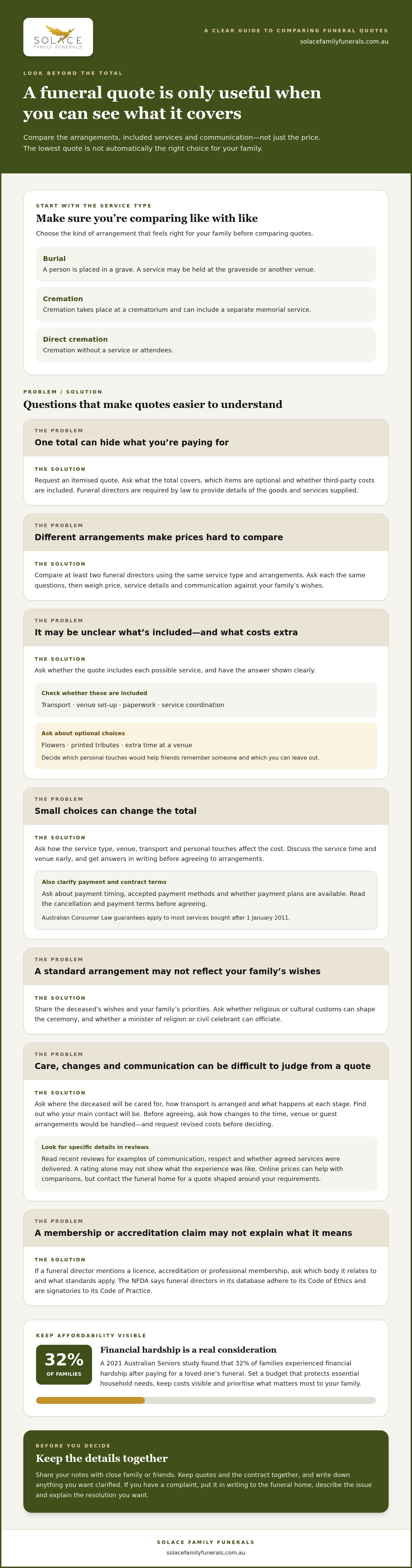
Burial means placing someone in a grave; cremation takes place at a crematorium; direct cremation is cremation without a service or attendees. After someone dies, identify who will arrange the funeral, decide whether you prefer burial or cremation, discuss the arrangements, then set the service time and venue. If you have a complaint, put it in writing to the funeral home, describe the issue and explain the resolution you want.
Compare included services and optional extras
Start by listing the people and moments that matter to your family, then compare each arrangement with that list. Check what the quote includes and which items, if any, cost extra.
- Choose between a burial, cremation or direct cremation. A burial may include a service at the graveside or another venue; cremation can include a separate memorial service.
- Ask whether the quote includes transport, venue setup, paperwork and service coordination. These are possible funeral director services, so have each item shown clearly.
- Mark optional choices, such as flowers, printed tributes or extra time at a venue. Decide which would help friends remember someone and which you can leave out.
- Ask whether religious or cultural customs can shape the ceremony. A minister of religion or civil celebrant may officiate, depending on your family’s preference.
Ask about services and costs
Request an itemised quote and compare like with like. To decide how to choose a funeral director, ask the same questions about each arrangement and note the answers together.
- Ask what the total quote covers, which items are optional, and whether third-party costs are included. Funeral directors are required by law to provide details of the goods and services supplied.
- Ask what choices affect the cost, such as the service type, venue, transport and personal touches. Get the answers in writing before agreeing to arrangements.
- Discuss the service time and venue early. Ask the director to explain how each choice affects the schedule and which venues suit the ceremony you have in mind.
- If you’re unhappy, write to the funeral home, explain what happened and state the outcome you’re seeking. Keep the quote and messages together, and ask about its complaint process.
Before deciding, share your notes with close family or friends. If a funeral director mentions an industry association, ask what its membership means for the service and your choices.
Comparing funeral directors and requesting quotes
Comparing written quotes can make a difficult decision more manageable. Ask each funeral home the same questions, then weigh the price, service details and communication against your family’s wishes.
-
Compare funeral directors, prices and reviews
Compare at least two funeral directors using the same service type and arrangements, so differences are easier to see. Read recent reviews for specific details about communication, respect and how agreed services were delivered, rather than relying on a rating alone. Note whether the funeral home answers your questions clearly. Online prices can help you compare, but contact the home for a quote shaped around your requirements.
-
Request itemised quotes and compare payment options
Ask each funeral home for an itemised quote that separates its services from other costs. Check what is included, which extras are optional, and what could change the total. Ask about payment timing, accepted payment methods and whether payment plans are available. Australian Consumer Law guarantees apply to most services bought after 1 January 2011; read the contract’s cancellation and payment terms before agreeing.
-
Check licence, accreditation and reputation
If a funeral director refers to a licence, accreditation or professional membership, ask which body it relates to and what standards apply. The NFDA says funeral directors in its database adhere to its Code of Ethics and are signatories to its Code of Practice. Look for recurring examples of helpful or unclear communication in reviews, then consider whether the funeral home’s approach suits you.
Keep your quotes and contract together, and write down anything you want clarified before making a decision. To compare service arrangements in your own time, view funeral service options.
Checking suitability, transparency, affordability and flexibility
Compare how each funeral home handles practical care, communication and changes to arrangements. These details help you decide whether its approach suits your family.
- Ask where the deceased will be cared for before the service and how transport is arranged. Request a clear explanation of each stage, from collection to arrival at the funeral home or venue. If you’re considering burial, ask how the timing and transport fit with the cemetery service.
- Visit the funeral home if that would help you decide. Consider whether the space suits your family and whether the person guiding you listens carefully. Ask who your main contact will be. Families often work closely with one or two key people, while others support the arrangements behind the scenes.
- Ask how the funeral home can support the ceremony you have in mind. For example, discuss including a community or cultural practice and how the venue can accommodate it. Clear answers help you understand whether the arrangements can reflect your wishes and what, if anything, would add to the cost.
- Set a budget that protects essential household needs, then ask which choices affect the total. A 2021 Australian Seniors study found that 32% of families experienced financial hardship after paying for a loved one’s funeral. Use that finding as a reason to keep costs visible and prioritise what matters most to your family.
- Before agreeing, ask how changes to the service time, venue or guest arrangements would be handled. Request an explanation of any revised costs before deciding. If several relatives are involved, nominate one person to keep notes and share updates, so the funeral home receives clear instructions.
Discussing the deceased’s and family’s wishes
Bring together what the deceased wanted and what family members need. A shared list can help everyone discuss the arrangements with care.
-
Consider the deceased person’s wishes
Start with any conversations, written instructions or funeral plan the deceased left. Note preferences about burial or cremation, a coffin, music, readings, religious customs and the cemetery. Separate firm wishes from suggestions so the funeral director can understand what matters most and where the family can decide.
If their wishes are unclear, choose details that reflect their life rather than trying to guess every preference. A favourite song or personal reading, for example, can make the ceremony meaningful without requiring a large gathering. Keep your notes together and share them with the person coordinating arrangements.
-
Discuss the family’s wishes and care needs
Invite close family members to share what they need from the service, including children where appropriate. In Australia, involving close relatives, including children, can help acknowledge their feelings. If there’s time, read a funeral planning guide together before meeting the director and note any differing views.
Agree on one family contact to communicate decisions and receive updates. Ask how the deceased will be collected, where they’ll be cared for, and how transport to the funeral home or cemetery will be arranged. If family members want time together before the service, explain this early and discuss suitable arrangements.
When you’re ready to talk through your family’s wishes, discuss funeral arrangements with the team.
Solace Family Funerals: Direct Cremation
Solace Family Funerals offers Direct Cremation for families who prefer cremation without a service or attendees. It may suit you if you want a simple arrangement or would rather gather with family and friends separately to remember your loved one.
If you want time together before cremation, Family Viewing offers a private gathering. For a ceremony, Full Service Cremation includes a service, while Full Service Memorial provides a dedicated opportunity to gather and remember. Consider which option reflects the deceased’s wishes, your family’s needs and the farewell you want to create.
These options can turn the comparisons in this guide into a practical next step. Visit solacefamilyfunerals.com.au to discuss arrangements that feel right for your family.
Take the next step at your own pace
There’s no single right way to say goodbye. Knowing how to choose a funeral director means finding arrangements that respect the person who has died and feel manageable for those making decisions. Before moving ahead, write down what matters most, such as a quiet farewell, time together or a ceremony where friends can share memories. Use that list to guide your next conversation and keep decisions grounded in your family’s priorities.
Solace Family Funerals offers Direct Cremation, Family Viewing and Full Service Cremation, giving families different ways to arrange a farewell. You can discuss which option reflects your wishes and what you’d like the day to include, without needing to settle every detail in advance.
Contact Solace Family Funerals to discuss the arrangements that feel right for your family. Take one step at a time; a thoughtful conversation can help make the way forward clearer.
Frequently Asked Questions
What services does a funeral director provide in Australia?
A funeral director coordinates practical arrangements and helps shape a farewell around your family’s needs. This may include organising transport, service timing and a venue, assisting with paperwork, and coordinating with a celebrant or minister. They can also discuss burial or cremation and personal or cultural elements. Ask which tasks they’ll manage and which decisions remain with your family.
What questions should I ask before choosing a funeral director?
Ask who your main contact will be, how the deceased will be cared for, and what support is included before, during and after the service. You can also discuss how religious or cultural practices will be accommodated, who will coordinate with the venue, and how changes to your plans are handled. The answers help you understand the working relationship as well as the arrangements.
How much does a funeral director cost in Australia, and what is included in the quote?
The price depends on the arrangements, so request a quote before deciding. Cost factors include whether you choose burial or cremation, the type of service, transport, venue requirements and personal additions. Ask for an itemised quote that separates the funeral home’s services from other costs. This makes it easier to see what the total covers before you agree.
How can I compare funeral directors’ quotes and avoid hidden fees?
Compare quotes for the same type of farewell, then check each line for services, optional additions and costs charged by other parties. Ask the funeral home to explain unfamiliar terms and describe what could change the total. Keep the written quote alongside any revised version, and make sure agreed changes appear in writing. Clear documentation helps you track decisions without relying on memory.
Can I choose a funeral director outside my local area in Australia?
You can choose a funeral director outside your local area, but distance can affect practical arrangements. Ask how transport will be coordinated and whether the director can work with your chosen cemetery, crematorium or service venue. Check that the quote explains any distance-related costs and who will coordinate each part. For a Gold Coast service, weigh the convenience of local coordination against your family’s priorities.


