
Ashes may be ready for collection 48 hours after cremation in Queensland, depending on the crematorium’s schedule, but you don’t have to decide what happens to them straight away. If you’re considering what to do with ashes after cremation in QLD, you can keep them at home while you take time to choose a resting place or memorial.
It’s understandable if you’re unsure what comes next, especially when there’s no single right way to remember someone. This guide explains when ashes are usually ready, how collection and handling work, and what to consider before scattering them in a particular place.
You can keep ashes in an urn, arrange burial or interment in a cemetery or memorial garden, or use a small portion for a personal tribute. You can consider each option in your own time and choose what feels respectful and right for your family.
Key Takeaways
- Ashes may be ready for collection 48 hours after cremation in Queensland, depending on the crematorium’s schedule.
- Before scattering ashes, understand the permission requirements for the location and consider how to minimise environmental impact.
- You can create a living memorial with treated ashes, or keep ashes in an urn at home while deciding what feels right.
- If you’re considering a burial service, Solace Family Funerals’ Burial with Service can provide a meaningful way to farewell your loved one.
Where can I scatter ashes?
In Queensland, you can keep ashes at home, arrange burial or interment, or scatter them in a suitable place. Permission requirements and environmental considerations depend on the location. If you’re deciding what to do with ashes after cremation in QLD, begin by thinking about a place that holds meaning for your family, then find out what rules apply there.
Permission for scattering ashes
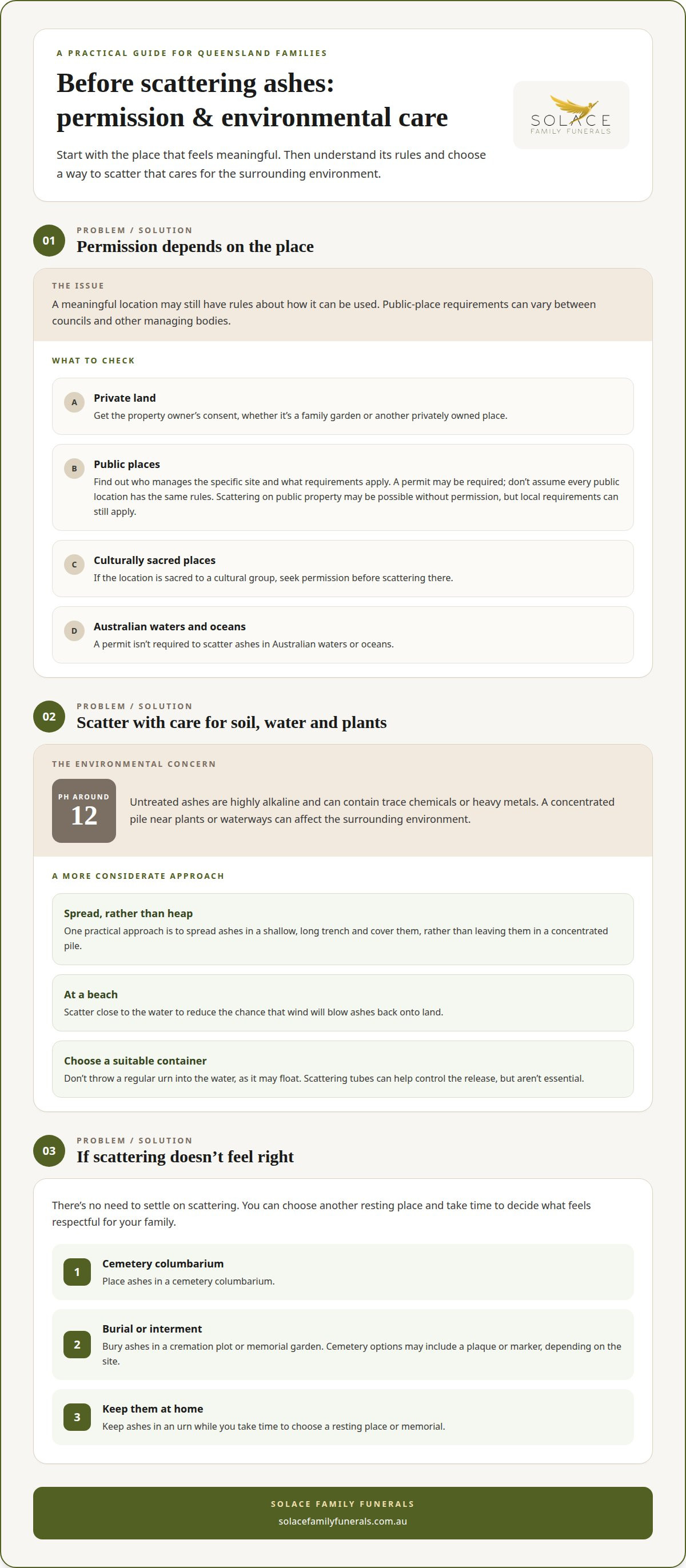
Permission means getting the necessary consent or approval to scatter ashes at your chosen location. On private land, you need the property owner’s consent, whether it’s a family garden or another privately owned place.
Public places need more care: requirements can vary between councils and other managing bodies, and a permit may apply. Don’t assume every public location has the same rules. Before making plans, find out who manages the specific site and what requirements apply. If the place is sacred to a cultural group, seek permission before scattering there.
A personally significant location may have rules about how it can be used. In Queensland, scattering on public property may be possible without permission, but local requirements can still apply. A permit isn’t required to scatter ashes in Australian waters or oceans. Consider the chosen site and scattering method as you decide what to do with ashes after cremation in QLD.
Environmental considerations for scattering
Environmental care means dispersing ashes in a way that limits their effect on soil and water. Untreated ashes are highly alkaline, with a pH around 12, and can contain trace chemicals or heavy metals. Scattering them in a concentrated pile near plants or waterways can affect the surrounding environment.
One practical approach is to spread ashes in a shallow, long trench and cover them, rather than leaving them in a heap. At a beach, scatter close to the water to reduce the chance that wind will blow ashes back onto land. Don’t throw a regular urn into the water, as it may float. Scattering tubes can help control the release, but aren’t essential.
If scattering doesn’t feel right, you can place ashes in a cemetery columbarium, bury them in a cremation plot or memorial garden, or keep them in an urn at home. Cemetery options may include a plaque or marker, depending on the site.
Can more than one memorial be created from the ashes?
Yes. Families in Australia can use a small portion of ashes for a personal keepsake and choose a separate resting place for the rest. You might scatter some, keep the remainder in an urn, or create a memorial to visit. These choices can reflect different family members’ preferences and ways of remembering.
A memorial tree can create a living tribute in a garden or another suitable place. Use ashes treated for planting rather than placing untreated ashes directly around a tree. Untreated ashes are highly alkaline and can harm plants, so treatment makes this kind of memorial more suitable for growing conditions. The tree’s location and ongoing care also shape the tribute.
For a keepsake, a small amount of ashes can be incorporated into memorial jewellery or glass artwork. Glass memorials are made by incorporating ashes into the glass during firing. Other possibilities include a memorial stone or pottery. These options offer a personal reminder to carry or display while the remaining ashes are kept, buried or scattered.
More than one memorial can reflect different family preferences. One relative, for example, may value jewellery, while others prefer a tree or a place to visit. Before arranging a memorial, decide how the ashes will be divided and who will keep each keepsake. A small portion can be used for an item while the rest remains together.
Direct cremation doesn’t prevent a later gathering. A memorial after direct cremation can be organised independently or through a funeral provider, allowing family and friends to remember the person together. If you’d like a planned gathering, a Full Service Memorial can provide a setting for shared remembrance. The memorial choice is yours, and it can be made separately from the cremation arrangements.
Collection and handling of ashes
In Queensland, the crematorium holds the ashes until you or the funeral director collects them. The schedule affects when collection can happen, so it helps to understand the usual timing and how the ashes are returned.
Ashes collection timelines
Collection timelines describe how long it takes for the crematorium to prepare ashes after cremation. In Queensland, ashes may be collected 48 hours after cremation, depending on the crematorium’s schedule. Most crematoriums can have packaged ashes ready within 48 hours. The crematorium may hold them until you or the funeral director collects them, so collection arrangements affect when they reach your family.
Collecting ashes
Collection means receiving the labelled ashes from the crematorium, usually in a standard container. After cremation, non-combustible materials such as metals are separated from the cooled remains, and the ashes are labelled under Queensland requirements. A decorative urn can be used instead when one has been paid for and provided. Carry the container carefully and keep it secure during transport.
You can take ashes on domestic or international flights from Queensland, but airline requirements vary. For air travel, carry a funeral director’s letter to help verify the ashes at security screening. For international travel, check the destination country’s entry requirements too.
If you’re collecting ashes, decide who will collect them and where they’ll be kept afterwards. A family member or funeral director can collect them from the crematorium, then place the container somewhere stable and dry. If transferring ashes into a traditional urn, handle the container carefully and use a steady surface to reduce the risk of spills.
Queensland also sets a process for ashes left without reasonable written disposal instructions. After 1 year from cremation, the person in charge of a crematorium may bury them in a burial ground, but must give the applicant at least 28 days’ written notice first. Providing instructions helps guide what happens next.
Keeping ashes at home in a cremation urn
You can keep cremated remains at home in an urn, and you don’t need to decide immediately whether to scatter them. Taking time can help your family consider what feels meaningful without the pressure of funeral arrangements. Keeping the urn at home also leaves options open while family members discuss a lasting memorial.
Choose a secure place for the urn where it can be treated with care, such as a stable shelf or a dedicated space for remembrance. Consider whether household activity, visiting children or pets could disturb it. A photograph or another personal memento nearby can create a quiet place to remember someone without a separate memorial site.
An urn gives the ashes a single, considered resting place. Some families keep all the remains together; others use a small portion for jewellery or another keepsake and retain the rest. If you’re considering dividing the ashes, discuss the plan with everyone involved first. This can prevent uncertainty about who holds each portion and what happens to it later.
Keeping ashes at home doesn’t rule out burial, cemetery placement or scattering later. You can arrange one of these options when your family has reached a decision, or continue keeping the urn at home. Ashes may contain small fragments, so handle the container carefully if transferring them. A secure lid and steady surface can help prevent spills.
If you’re arranging cremation and want support with the choices that follow, discuss your funeral arrangements.
Solace Family Funerals: Burial with Service
Solace Family Funerals offers Burial with Service for families who want a gathered farewell alongside a burial. It can be a fitting next step if you’d like loved ones to come together, while the ashes article has helped you consider different resting places and memorial choices.
If you’re still weighing cremation against burial, Solace Family Funerals also offers Direct Cremation, Family Viewing and Full Service Cremation, which includes a gathering before cremation. The right arrangement depends on the kind of farewell your family wants, whether that includes a service or a quieter approach. You can talk through the options and decide what feels appropriate for your circumstances.
Contact Solace Family Funerals to discuss a burial with service.
Choose a next step that feels right
Your next step doesn’t need to settle every question at once. Start by talking with the people closest to you about what remembrance should look like in daily life. Some families value a place to visit; others find comfort in a private keepsake or shared gathering. Listening to different wishes can help shape a choice that honours your loved one without expecting everyone to grieve in the same way. Begin by naming what matters most: closeness, a lasting tribute, or a simple way to mark important dates together.
As you consider what to do with ashes after cremation in Queensland, let your decision reflect your family’s values and circumstances. You can take time, revisit the conversation, and choose a meaningful next step when you’re ready.
If guidance would make the next step easier, talk with Solace Family Funerals. You deserve space to make this decision with care, and there’s no single way to remember someone well.
Frequently Asked Questions
Are there any rules around what you can and can’t do with ashes?
Yes. Your options depend partly on where you want the ashes to go. Queensland families can keep them at home, arrange interment or burial, or scatter them where local requirements allow. You need permission from the owner before scattering on private property, and rules for public places can vary between councils and managing bodies. For a specific location, find out who manages it and what rules apply.
What are the options for keeping or scattering cremated ashes in Queensland?
You can keep ashes at home, place them in a columbarium niche, bury them in a cremation plot, or scatter them where local requirements allow. Families can also use a small portion for a keepsake, such as memorial jewellery or glass artwork. If relatives prefer different forms of remembrance, discuss how the ashes will be shared so everyone understands the plan.
Do you need permission to scatter ashes on public land in Queensland?
Not always, but there isn’t one rule for every public location. Scattering on public property may be possible without permission in Queensland, while councils and other public bodies can set different requirements, including permits for particular places. A beach, park or riverbank may have a different managing body from nearby land. Identify who manages your chosen site and follow its requirements.
What are the rules for scattering ashes at Queensland beaches, rivers, or national parks?
Requirements depend on the particular beach, river area or national park and the body responsible for managing it. Scattering ashes in Australian waters or oceans doesn’t require a permit, while scattering in other public places may have specific requirements. At a beach, wind direction and proximity to the water affect where ashes may disperse. For a national park or riverbank, check the rules for that particular site.
Can you scatter cremated ashes on private property in Queensland without permission?
No. You need the private-property owner’s consent before scattering ashes there, including on land belonging to relatives or friends. Ask permission before settling on a date or inviting family, so the owner can consider the location and timing. If the property changes hands or someone else manages the land, make sure consent comes from the person with authority over it.
How do you place ashes in a cemetery, memorial garden, or columbarium in Queensland?
Start by contacting the cemetery or memorial venue that manages the place you have in mind. Its staff can explain the available options and arrangements for a niche, cremation plot or memorial garden. Ashes may also be interred in an existing cemetery grave, depending on that cemetery’s arrangements. A funeral director can help organise interment in a grave if you’d value support with the process.


