
Scattering ashes at Australian beaches is legal in most cases and usually doesn’t require a formal permit. Gold Coast locations for scattering ashes can include a quiet beach, the Broadwater or an ocean setting, though local requirements may depend on who manages the place.
Choosing between locations for scattering ashes on the Gold Coast can feel like a deeply personal decision, and it’s understandable to want clear guidance before making plans. This article explains general beach rules and explores Broadwater and ocean options, so you can consider what feels right with more confidence.
You’ll find points to consider when choosing a place, including privacy, respectful timing and the difference between scattering ashes and burial at sea.
Key Takeaways
- Beach scattering is usually possible without a formal permit, but the rules can depend on who manages the location.
- Explore whether a quieter beach, the Broadwater or an ocean setting feels right for a respectful farewell.
- Keep the ceremony considerate by choosing a suitable place and avoiding items that could become marine debris.
- Before planning a gathering in a park or waterway, find out which authority manages the area and what permissions apply.
Is It Legal to Scatter Ashes at the Beach in Australia?
Scattering ashes at Australian beaches is generally legal and usually does not require a formal permit. There is no single national law governing ash scattering, so local requirements depend on who manages the beach, such as a council, parks authority, another public land manager or private landowner.
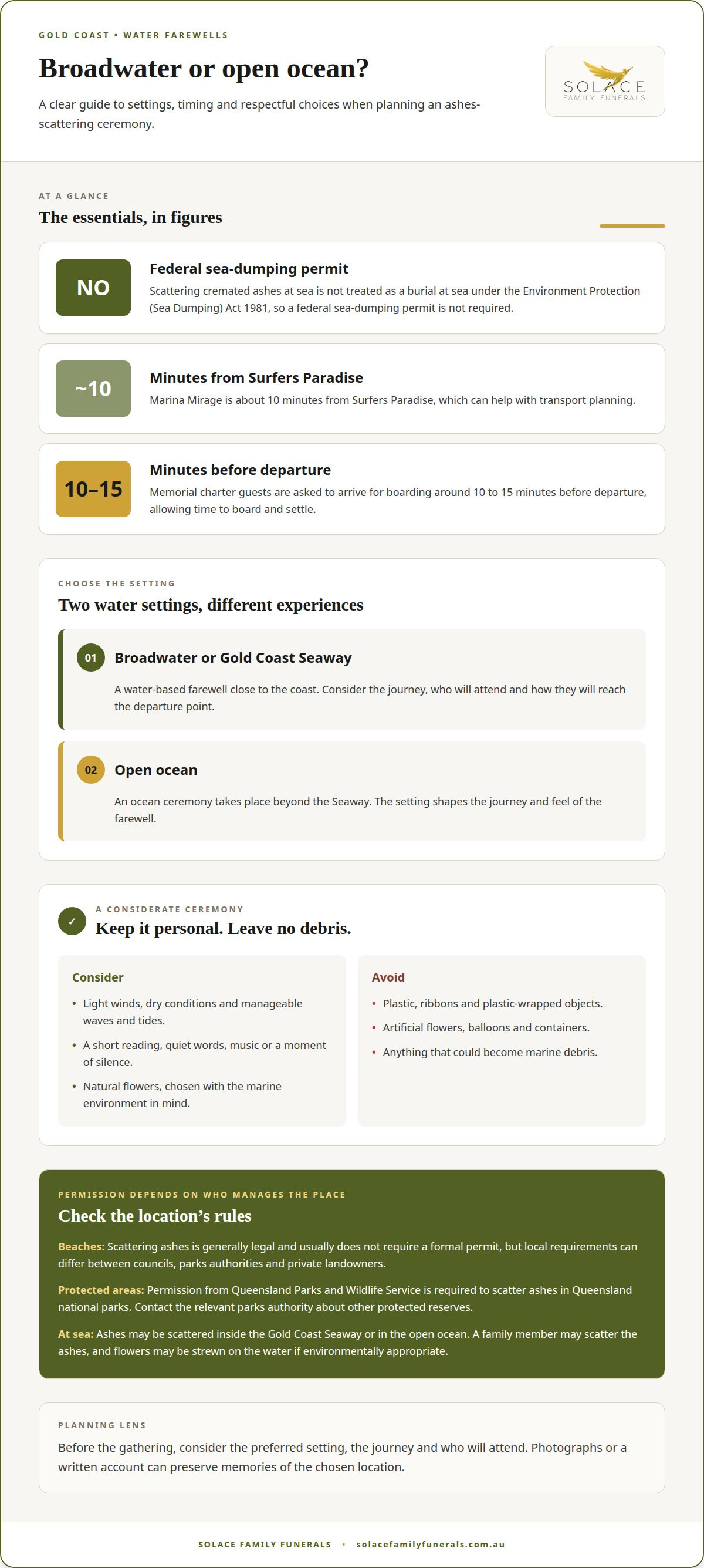
Yes, ashes can be scattered at sea off the Gold Coast. Scattering cremated ashes at sea isn’t treated as a burial at sea under the Environment Protection (Sea Dumping) Act 1981, so a federal sea-dumping permit isn’t required. A ceremony may take place inside the Gold Coast Seaway or in the open ocean; these are different settings to consider when planning a vessel-based farewell.
Family and friends can gather for a vessel-based ceremony, with the closest relative scattering the ashes at a VMR Southport dispersal. Flowers may be strewn on the water. Choose environmentally appropriate items and avoid plastic, ribbons, artificial flowers, balloons, containers and plastic-wrapped objects that could become marine debris. Natural flowers, a reading or music can create a personal memorial without leaving lasting items behind.
At a beach, choose a quieter spot away from swimmers, children at play, people fishing, dining areas, surf clubs, busy entrances and organised events. Light winds, dry conditions and manageable waves and tides can make the ceremony easier. A short reading, a favourite song played discreetly or a moment of silence can mark the occasion without disturbing other beachgoers.
In the Gold Coast hinterland or a national park, permission from Queensland Parks and Wildlife Service is required to scatter ashes in Queensland national parks. For other protected reserves, contact the relevant parks authority before planning.
Respect the environment by leaving no marine debris and being considerate of the place and people around you. Mudgeeraba and Southport Lawn cemeteries also have memorial plaque areas for people whose ashes have been scattered.
Alternatives include a cemetery ashes site, a columbarium niche or placement in an existing grave. The cost of a scattering ceremony or memorial service depends on the arrangements; factors include the ceremony format and what it involves.
To plan a ceremony, choose a beach, Broadwater or ocean setting, then organise the gathering in line with the location’s management rules. Keep it simple, with flowers, music or a reading chosen to suit your family.
General legality of scattering ashes at Australian beaches
In Queensland, the Cremations Act 2003 (Qld) governs the broader framework for scattering ashes. Ashes may be scattered on land or water, and a small, private ceremony may be held without a permit. The practical step is to identify who manages your chosen beach, because council beaches, protected reserves and private land can have different requirements.
Most Queensland council beaches permit ash scattering, but local requirements still apply. Choose a spot away from busy swimming areas and organised events, and check the local rules before setting a time. A quiet stretch of sand may suit a small gathering, while a popular beach entrance may not provide the privacy or consideration your family wants.
Protected land requires particular care. For a beach in a reserve or national park, contact the relevant parks authority about permission. Scattering ashes in Queensland national parks requires permission from Queensland Parks and Wildlife Service. In the Great Barrier Reef Marine Park, scattering is usually permitted in general use zones, while sanctuary and preservation zones have additional restrictions.
Keep the ceremony gentle on the environment. Avoid plastic, ribbons, balloons, artificial flowers and containers, which can become marine debris. A favourite reading, a few spoken words or a quiet moment can mark the farewell without leaving objects behind. If you’re considering biodegradable items, make sure nothing can become litter or enter the water.
For a considered farewell after cremation, full service cremation arrangements can include a ceremony shaped around your family’s wishes. The location and its manager remain central to planning a beach gathering, so make those details part of the arrangements from the outset.
Gold Coast Broadwater and ocean scattering locations
The Gold Coast Seaway and open ocean offer distinct settings for scattering ashes. A Broadwater or Seaway departure may suit families seeking a water-based farewell close to the coast, while an ocean ceremony takes place beyond the Seaway. Each setting shapes the journey and feel of the farewell.
A charter can give family and friends a structured setting to gather before the ashes are scattered. As you consider locations for scattering ashes on the Gold Coast, think about who will attend, how they’ll reach the departure point and what kind of ceremony feels right. Marina Mirage is about 10 minutes from Surfers Paradise and about 15 minutes from Broadbeach, which can help with transport planning.
Memorial charter guests are asked to arrive for boarding around 10 to 15 minutes before departure. Allow time for everyone to arrive, board and settle before the vessel leaves. Sharing departure details clearly with relatives and friends can help the gathering begin calmly.
Keep the ceremony personal and simple. The closest relative may scatter the ashes while flowers are strewn on the water; a short reading, quiet words or music can also mark the occasion. Avoid plastic, ribbons, artificial flowers, balloons, containers and wrapped objects that could become marine debris. Choose flowers and other items with the marine environment in mind.
Before the funeral or memorial gathering, decide whether your family prefers the Broadwater, the Seaway or the open ocean. Consider the journey, who will attend and the kind of farewell you want to share. Light winds, dry conditions and manageable waves and tides can help the ceremony proceed comfortably. Photographs or a written account can preserve memories of the chosen location.
Council permission for scattering ashes on the Gold Coast?
In Queensland, ashes may be scattered on land or water, and a small, private ceremony may be held without a permit. However, rules vary across Gold Coast locations. The relevant authority depends on who manages the place: the council, Queensland Parks and Wildlife Service (QPWS), another public land manager or a private landowner.
Scattering ashes is permitted at most Queensland council beaches, but local requirements still apply. For a Gold Coast park or council-managed foreshore, identify the managing authority and ask about the site’s rules before organising a gathering. This clarifies whether the ceremony, chosen spot or any items brought along need particular consideration.
National parks and protected areas have a separate permission process. Check the relevant requirements before scattering ashes in a protected natural area. For a memorial ceremony in a QPWS-managed area, contact the local QPWS office and seek permission from the local government. A natural setting does not remove the need to follow the requirements for that location.
Waterways also require location-specific planning. A ceremony on a council-managed foreshore involves a different land manager from a vessel-based gathering on the Broadwater or at sea. First establish whether the ceremony will take place on land, a council-managed shoreline or aboard a vessel. Direct any permission enquiry to the authority responsible for that setting.
Be considerate of others using the area. In a park, choose a quiet spot away from busy paths, play areas and organised events. On a foreshore, avoid swimmers and crowded access points. Wherever you scatter ashes around the Gold Coast, leave no plastic, balloons, containers or other items that could become litter or marine debris.
Once you’ve settled on a location and its permission requirements, discuss funeral arrangements that can support your family’s plans.
Solace Family Funerals
Solace Family Funerals can help you plan funeral and memorial arrangements following a cremation as you decide how you’d like to remember your loved one. For a separate beach, Broadwater or ocean gathering, the location and its permission requirements remain important parts of your plans.
Depending on what feels right for your family, arrangements may include Direct Cremation, Family Viewing, Full Service Cremation or a Full Service Memorial. You can talk through the options and the farewell you have in mind without having every detail settled beforehand.
If you’d like to discuss the next steps, contact Solace Family Funerals.
Take the next step at your own pace
Choosing where to scatter ashes on the Gold Coast is one part of creating a farewell that feels true to the person you remember. You don’t need to settle every detail at once. Start with what matters most to your family, whether that’s quiet, a meaningful connection to the coast or time together with loved ones.
Then shape a simple plan that feels manageable. Consider who you’d like beside you and what would make the gathering personal, and let those choices guide the arrangements. There’s no single right way to remember someone; choose an approach that feels right to you and those closest to them.
If you’d value a calm conversation about funeral or memorial arrangements, contact Solace Family Funerals. You can take the next step when you feel ready, knowing your farewell can be shaped with care.
Frequently Asked Questions
Should You Scatter Close to the Water?
Not necessarily. Choose a place where you can scatter ashes without entering the water or standing on an unstable edge. Wind and waves can affect where ashes travel, so observe conditions before beginning. If the shoreline is difficult to reach or too busy for a private moment, move to a quieter stretch or consider a vessel-based ceremony.
What If Other People Are Around?
If others are nearby, consider whether your ceremony can take place without drawing them into a private family moment. For example, if another group is using your chosen stretch of sand, move further along the beach or wait for a quieter moment. Keep the gathering discreet and avoid interrupting someone else’s activity or an organised event.
What If the Beach Changes or You Can’t Visit Again?
Preserve a memory of the place with photographs, a written location or its coordinates. You might also record why your family chose that spot. These details can help relatives remember the setting if the shoreline changes or returning in person is not possible. Keep the record private if that feels right for your family.
Where can ashes be scattered on the Gold Coast?
Options include a suitable beach, the Gold Coast Broadwater, the Seaway or an open-ocean setting. If you’d prefer a lasting place to visit, Mudgeeraba and Southport Lawn cemeteries have areas for memorial plaques after scattering. Cemetery ashes sites, columbarium niches and placement in an existing grave are other choices. Let the location and the kind of remembrance guide your decision.
What are the rules for scattering ashes on Gold Coast beaches?
Scattering ashes is generally permitted at Australian beaches and usually doesn’t require a formal permit, but local requirements can depend on who manages the beach. Queensland’s Cremations Act 2003 (Qld) forms part of the state framework. A council-managed beach, protected reserve and national park may have different requirements, so the location’s manager matters when planning a ceremony.
Which Gold Coast cemeteries and memorial gardens offer ash scattering?
Mudgeeraba and Southport Lawn cemeteries have memorial plaque areas for people whose ashes have been scattered.


