
What if a meaningful goodbye didn’t need to follow a familiar funeral format? Alternatives to a traditional funeral can be as simple as a small, private farewell or as shared as a gathering shaped around the things your loved one cared about. There’s no single way to honour a life, and choosing something less formal doesn’t make the goodbye any less personal.
You may be looking for an approach that feels manageable while family members have different wishes, live far apart or need space to grieve in their own way. It’s understandable to feel unsure where to begin. A farewell can also take place in stages: for example, a private family viewing and cremation can be followed by a memorial ceremony when people are ready to gather.
This guide explores private and shared options, including ways to personalise a memorial without the casket present. Consider what mattered to the person, what feels possible for those grieving and how to take a gentle next step without rushing into a decision.
Key Takeaways
- Explore alternatives to a traditional funeral, from a small family gathering to a farewell centred on a favourite place or activity.
- Compare options by privacy, timing, guest participation and the amount of structure that feels comfortable.
- Let the person’s wishes, family needs and cultural or spiritual practices help guide your decisions.
- Keep planning manageable: decide the purpose, choose a format, invite people and add one personal touch.
- Learn how Solace Family Funerals’ viewing, cremation and memorial options can support a farewell shaped around your family.
Alternatives to a traditional funeral: what can a farewell look like?
A familiar funeral service may not feel right for every person or family. You might want something quieter, more personal or easier for loved ones to attend. An alternative farewell is simply a different way to gather, remember or say goodbye. It might be a planned ceremony, a private moment or a gathering shaped around what mattered to the person.
The farewell and the choice of burial or cremation are separate decisions. A family might arrange a cremation without a ceremony, then come together for a memorial later. Or they might hold a service alongside a burial. The timing, setting and size of the gathering can be considered separately from what happens to the person’s body.
For instance, a family viewing may give close relatives time together before a cremation, while a later memorial gives friends and extended family a chance to share memories. A memorial can also be held without the casket present. These choices can be combined in different ways rather than treated as one fixed package. If burial is part of your thinking, Natural burial offers background on approaches that differ from conventional burial.
A meaningful alternative is any farewell that gives people a way to remember and say goodbye that feels true to the person and manageable for those grieving.
What makes a farewell feel different from a traditional funeral?
It might be less formal, held in a familiar or meaningful setting, or arranged at a time that allows distant relatives to attend. The gathering could be small, open to a wider circle or centred on a few shared memories instead of a set programme. These differences don’t make a farewell more or less valid. A personal service can still bring people together, make room for grief and offer care to those attending.
Does a meaningful goodbye need a formal service?
No. Some families prefer a private moment or no gathering at all. Meaning can come from quiet reflection, time together or a simple personal ritual. Others find comfort in a formal service, including cultural, religious or family traditions that matter deeply to them. You don’t need to set those traditions aside to make a farewell personal. Consider what to keep, adapt or add in a way that feels respectful.
If you’re unsure where to begin, you don’t have to settle every detail at once. Start by asking what kind of goodbye would feel most supportive: a moment for close family, a chance for a wider community to gather, or time to remember in a less formal way. That first thought can help you explore alternatives to a traditional funeral without feeling there’s one correct format.
Seven Alternatives to a Traditional Funeral
There isn’t one shape a farewell has to take. You might prefer a quiet moment with a few relatives, while another family may want a wider gathering with music, stories and familiar faces. These alternatives to a traditional funeral can be adapted to the person, your family’s needs and the time and energy you have for planning.
Small, private and delayed farewells
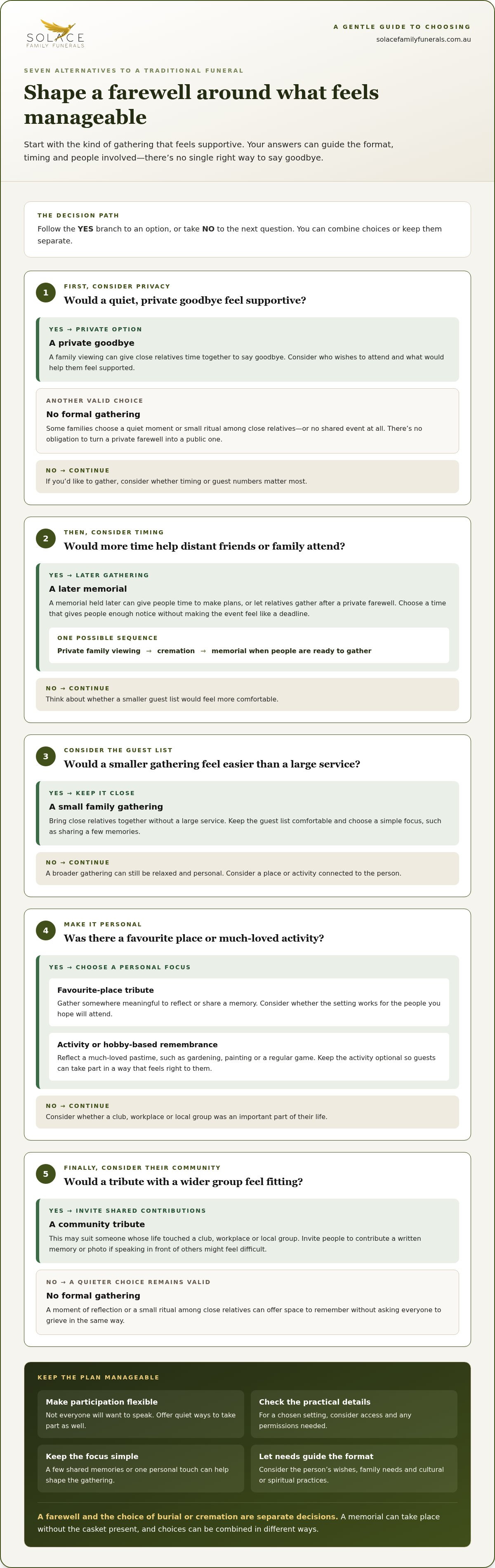
A smaller goodbye can feel more manageable when grief is raw or a large gathering feels overwhelming. A private moment or simple shared ritual can also leave room for family members to remember in their own way. If loved ones are spread across Australia, holding a memorial later may give them more time to attend. There’s no obligation to turn a private farewell into a public event.
- A small family gathering: Suits close relatives who want to be together without a large service. Keep the guest list comfortable and choose a simple focus, such as sharing a few memories.
- A private goodbye: May suit those who would value a quiet moment together. A family viewing gives close relatives time to say goodbye; consider who wishes to attend and what would help them feel supported.
- A later memorial: Can give distant friends and family time to make plans, or allow relatives to gather after a private farewell. Choose a time that gives people enough notice without making the event feel like a deadline.
Personal gatherings and community tributes
A shared farewell can still feel relaxed and personal. Start with something connected to the person, then shape the gathering around how people might like to remember them. Not everyone will want to speak, so offer quiet ways to take part as well. Keep practical details simple, and consider access and any permissions needed for your chosen setting.
- A favourite-place tribute: Suits someone with a strong connection to a particular place. You could gather there to reflect or share a memory. Consider whether the setting works for the people you hope will attend.
- An activity or hobby-based remembrance: Could reflect a much-loved pastime, such as gardening, painting or a regular game. Keep the activity optional so guests can take part in a way that feels right to them.
- A community tribute: May suit someone whose life touched a club, workplace or local group. Invite people to contribute a written memory or photo if speaking in front of others might feel difficult.
- No formal gathering: Some families choose not to hold a shared event. A moment of reflection or a small ritual among close relatives can still offer space to remember, without asking everyone to grieve in the same way.
If you’re considering a memorial without the casket present, this guide to memorial services without a casket can help you picture how the gathering might feel. Solace Family Funerals offers memorial, viewing and cremation options on the Gold Coast to help families shape a personal farewell.
How to choose an alternative funeral that feels right for your family
Choosing a farewell while grieving can feel like a lot to carry, especially when relatives have different preferences. You don’t need to find the perfect format straight away. Start by weighing a few practical questions: who needs to be there, when they can gather, how private the moment should feel and how much structure would help.
Match the format to the people taking part
Think about the needs of those closest to the person, as well as friends and relatives who may wish to attend. Travel, accessibility and different comfort levels around speaking can all shape what feels manageable. A gathering can offer ways to remember without asking every guest to address the group. A useful prompt is: What would help those grieving feel supported?
Let the person’s wishes guide the shape of the farewell
Consider what they said they wanted, the values they lived by, the relationships that mattered and the routines that brought them joy. Known wishes can offer direction, while immediate family members may also need time, privacy or the support of a familiar cultural or spiritual practice. Discuss what matters most and where there’s room to adapt.
The right format is the one that respects the person and supports the family, not the one with the most guests or the most ceremony. If family members disagree, try separating what feels essential from what is simply familiar. A quieter goodbye isn’t inadequate because it’s small, and a more structured service doesn’t have to feel impersonal.
If you’re planning a gathering, the guide to planning a memorial service on the Gold Coast can help you think through practical choices. Solace Family Funerals provides personal guidance on the Gold Coast, so you can talk through options at a pace that feels comfortable.
Practical ways to make a less formal farewell personal and manageable
Planning a farewell while grieving can make even small decisions feel weighty. Keep the plan simple and flexible. You don’t need an elaborate programme for people to feel included; one or two thoughtful details can give the gathering a sense of care. These steps can help turn an idea into a plan without adding more than your family can manage.
- Decide the purpose. Talk about what you hope the gathering will offer. It might be time for close family to reflect, a chance for friends to share memories, or simply a welcoming space to be together.
- Choose a format. Match the setting and shape to that purpose. A quiet gathering, a shared meal or a relaxed memorial can each work, depending on who is attending and what feels comfortable.
- Invite people clearly. Let guests know when and where to gather, how long the event is expected to last and whether there’s a particular dress preference. Explain that sharing a memory is optional, so no one feels put on the spot.
- Personalise one detail. Choose a photo, favourite music, shared food or memory cards. One familiar touch can make the occasion personal without creating a long list of tasks.
Make the gathering welcoming without over-planning
It’s all right to keep the arrangements modest. Choose one or two personal details, then leave room for the gathering to unfold naturally. Some guests may want to share a memory; others may prefer to listen or simply sit with family. Think about seating, access and travel, and whether there’s a quieter space where someone can take a break. The aim is comfort, not a perfect programme.
For alternatives to a traditional funeral, clear expectations can make the day easier for everyone. A short invitation might say, “Join us for a relaxed gathering to remember Alex. Wear what feels comfortable; there’s no need to prepare anything to say.” Adapt the wording to suit your family and any cultural or spiritual practices you’re observing.
Include people who cannot attend in person
Distance or other circumstances may keep someone from being there. You could invite them to send a written tribute, a photograph or a recorded message for the family to share. A video call may suit some families and settings, but it’s an optional way to connect, not something every farewell needs. Keep the focus on what feels comfortable and manageable for those taking part.
Plans can change as your family’s needs become clearer. You might keep the invitation list small, simplify the gathering or adjust the timing. A considered farewell doesn’t have to be complicated. Solace Family Funerals can help you consider a personal, manageable goodbye through its viewing, cremation and memorial options on the Gold Coast. Explore the options with Solace Family Funerals.
How Solace Family Funerals can support a farewell beyond the traditional format
Choosing a less familiar farewell doesn’t mean you need to manage everything alone. Solace Family Funerals is a locally family-owned Gold Coast funeral home offering compassionate funeral and cremation services. You can talk through the kind of goodbye you have in mind and consider how a service and the choice of cremation or burial fit together.
These are related but separate decisions. Cremation or burial describes what happens to the person’s body; a ceremony is one way for family and friends to remember them. Some families choose an unattended cremation and gather later, while others have a ceremony as part of the farewell. The timing and format can reflect your needs rather than follow a single pattern.
Different service options can support different kinds of goodbye
Each option offers a different balance of privacy and gathering. A direct cremation is unattended and takes place without a formal service. It may suit families who prefer a private goodbye or would rather arrange a memorial at another time.
A family viewing gives close relatives private time together before cremation or burial. For some, that moment is an important part of saying goodbye, even if they don’t want a larger gathering. A full-service memorial provides a dedicated ceremony without the casket present, allowing people to come together to remember and honour the person.
These choices can also form a sequence. For example, a family may choose direct cremation and hold a memorial later, when relatives are ready to gather. If you’re considering this approach, direct cremation followed by a memorial service explains how the two parts of a goodbye can be arranged separately.
Take the next step at your own pace
You don’t have to know exactly what you want before beginning a conversation. Start with what matters most: time together privately, a ceremony for a wider circle or the chance to gather later. Solace’s team can listen and help you consider options without pressure, so you can make decisions at a pace that feels manageable.
Clear information can make those decisions easier. Solace provides transparent, all-inclusive pricing across a range of options, so you can understand the arrangements being discussed. The team’s guidance is personal, and the choices remain yours.
If you feel ready to talk, speak with the Solace team about alternatives to a traditional funeral or any questions you have about the choices. A gentle first conversation can bring a little more clarity.
Take the next step in your own time
You don’t have to settle every detail today. A gentle place to begin is to identify what matters most to your family right now, then let the rest take shape as you’re ready. Alternatives to a traditional funeral aren’t a test of how well you can plan; they’re possibilities to consider with care, one decision at a time.
If family members see things differently, pause and listen before trying to reach agreement. Keep the conversation centred on what would feel respectful and manageable, rather than finding a format that satisfies every expectation at once. There’s room to take time, ask questions and make a considered choice.
Solace Family Funerals is locally family-owned and operated on the Gold Coast, with transparent, all-inclusive pricing across its options. Take a gentle next step with our Gold Coast team when you feel ready. You deserve space to choose a farewell that feels right for your family.
Frequently Asked Questions
Can a non-traditional farewell include religious or cultural elements?
Yes, a less formal farewell can still honour religious or cultural practices that are important to your family. You might include a prayer, blessing, reading or customary moment within a smaller gathering, or keep the ceremony format familiar while choosing a more personal setting. If relatives observe different traditions, talk together about what feels essential and how each person’s beliefs can be treated with respect.
How can friends who live interstate take part in a farewell?
Friends who can’t travel may still contribute in ways the family is comfortable sharing. They could send a short written tribute, a photograph or a voice message for relatives to keep or include in a private collection. If a video call suits the setting, agree in advance who will join and how they’ll take part. You can also let interstate friends know that attending remotely or sending a message is entirely optional.
What can families do if relatives want different kinds of farewell?
Start by hearing what each person hopes the farewell will provide, such as privacy, a shared ritual or time to say goodbye. Then look for a way to honour more than one need, perhaps with a small private moment followed by a separate gathering. Not every preference will fit, so it may help to agree on what matters most now and leave less urgent decisions until the family has had time to talk.
Does a celebration of life need speeches or a formal programme?
No, a celebration of life can be meaningful without speeches or a printed programme. You could invite a trusted person to offer a brief welcome, then leave the gathering open for conversation. If you’d like to make sharing easier, place a few suggested prompts on cards, such as “What will you remember most?” Guests can respond privately, speak if they wish or simply be present without being called on.
Can children be included in a less formal farewell?
Yes, children can be included in a way that suits their age, relationship with the person and individual comfort. Explain in plain language what the gathering will be like, who will be there and that they can ask questions or take a break. A familiar adult can stay close and help them decide whether they’d like to draw, share a memory or just attend. Avoid making participation feel compulsory.
Is it possible to remember someone without gathering everyone together?
Yes. You can remember someone privately, without coordinating a group event or asking relatives to grieve in the same way. For example, you might write a letter to the person, spend a quiet moment on an important date or keep a personal remembrance in a place that matters to you. These alternatives to a traditional funeral can offer space for reflection while respecting that others may remember differently.


